
What you actually receive
Real documents, not a mockup of one.
Every one of these is a real file, produced by the production renderer, drafted against the source your council consults and signed by a chartered professional in their own name.
- Document types drafted
- 14Document types drafted
- Specimens you can open now
- 14Specimens you can open now
- Citation categories checked before release
- 11Citation categories checked before release
- Councils whose requirements we hold
- 378Councils whose requirements we hold
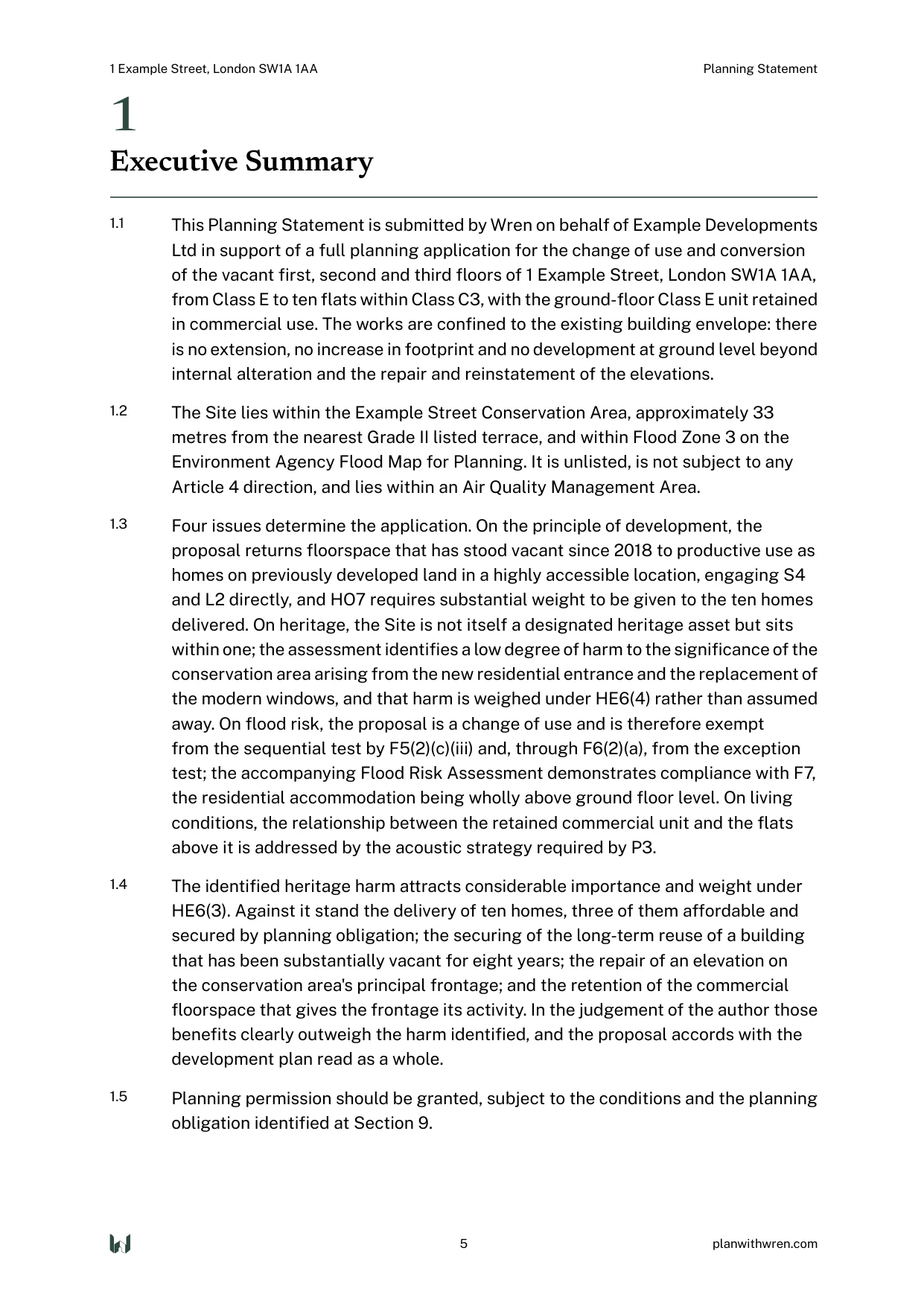
Read one in full
Not a template. The actual file.
The main written case for a planning application. It describes the site and the proposal, then argues the scheme against the policies your council will actually decide it under.
Every specimen on this page comes out of the same drafting pipeline, the same figure placement and the same template as a real case. Nothing here was written for the website.
All 14
Which of these you need is decided by your site.
Not by a package you choose. The appraisal names the route, the route names the documents, and your council's own validation list is what settles it.
Planning Statement
Open the specimen
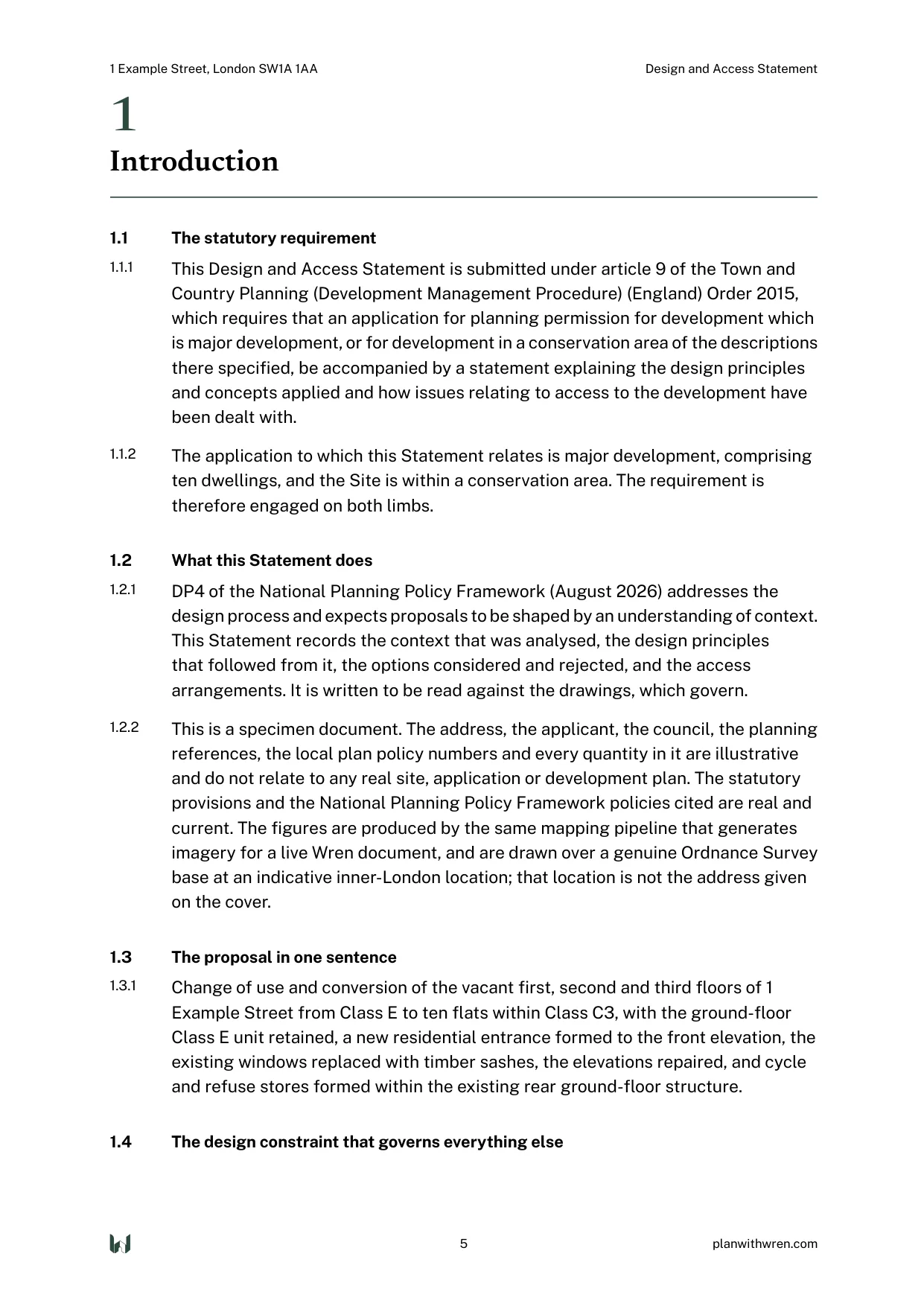
Design and Access Statement
Open the specimen
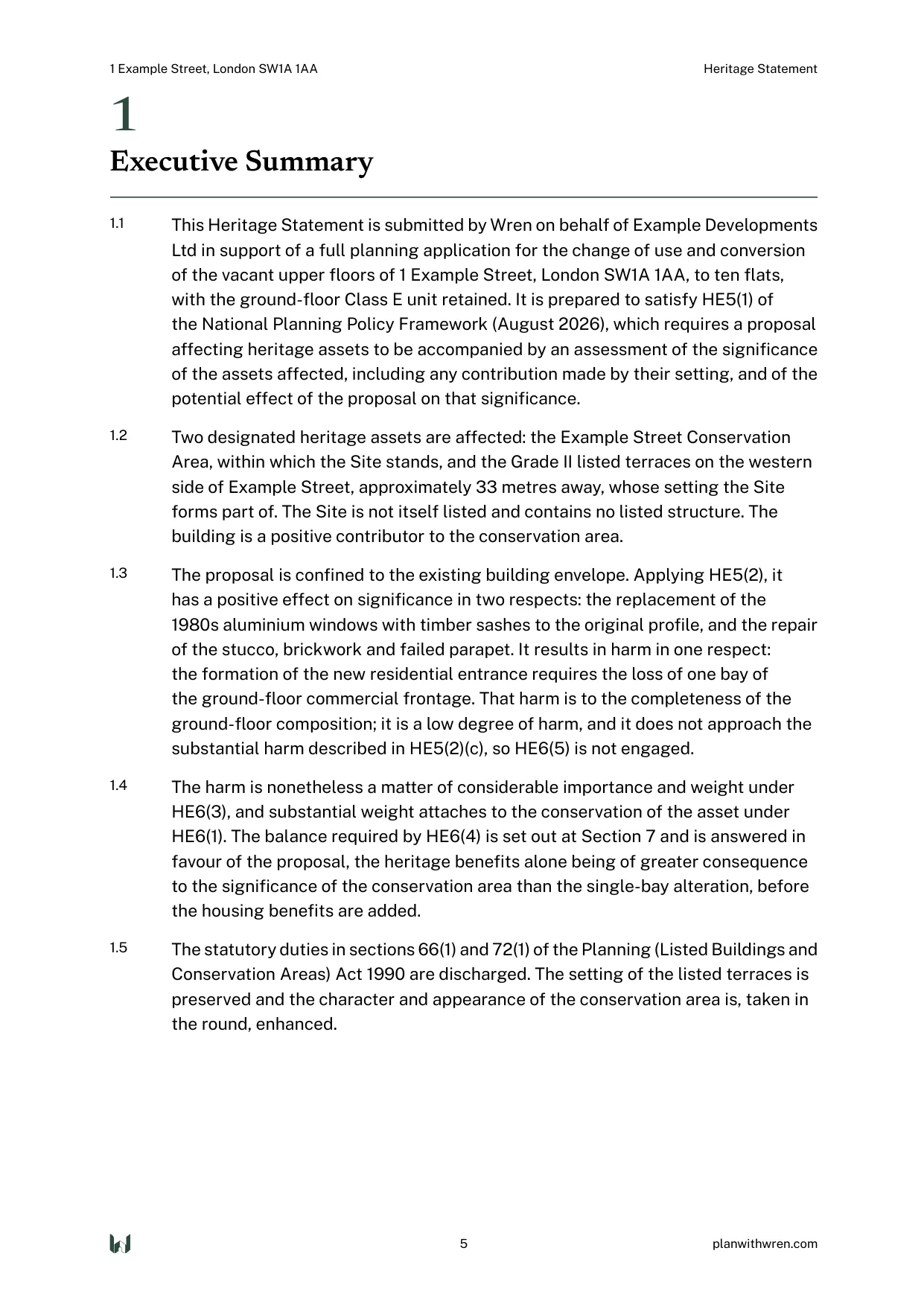
Heritage Statement
Open the specimen
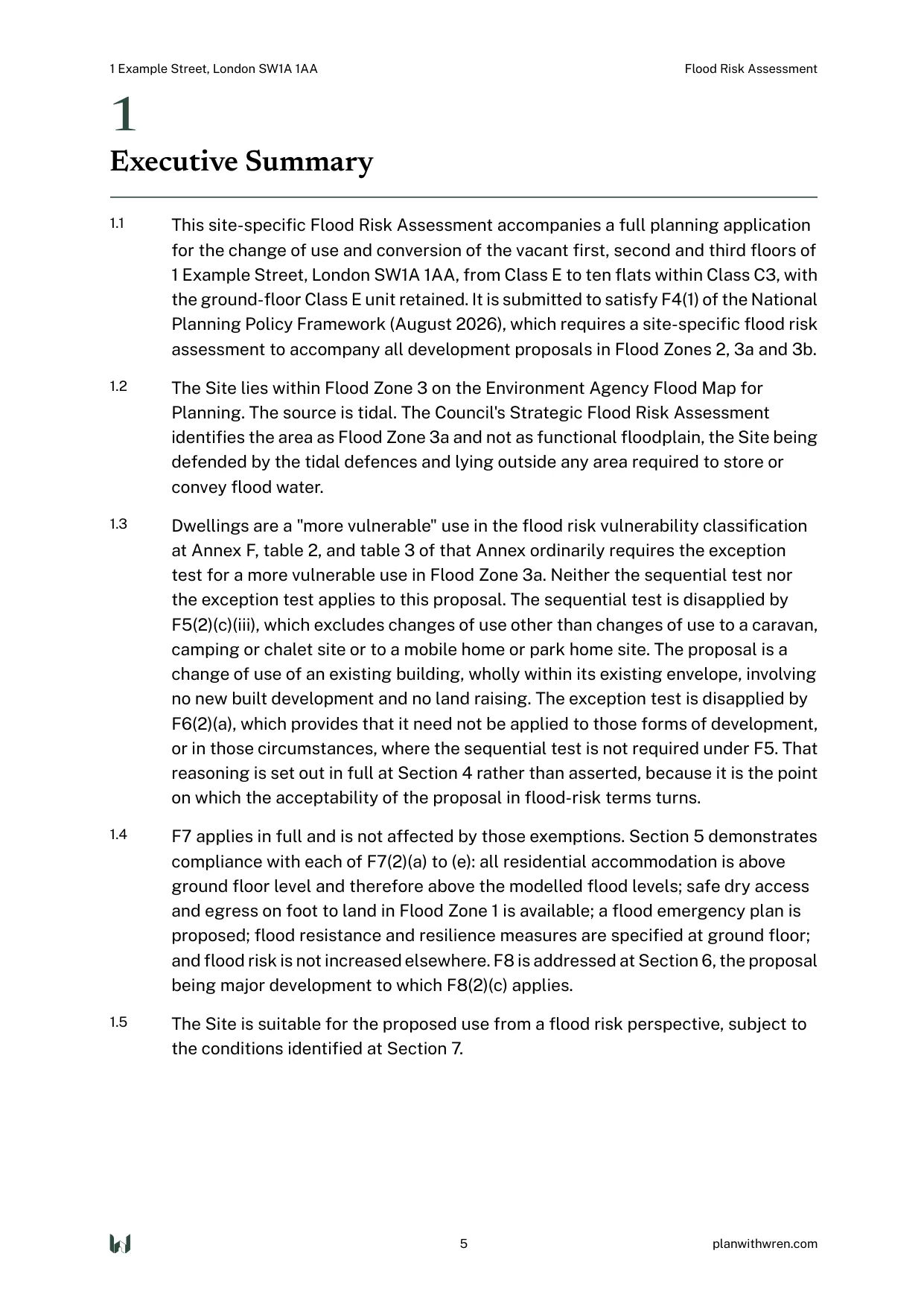
Flood Risk Assessment
Open the specimen
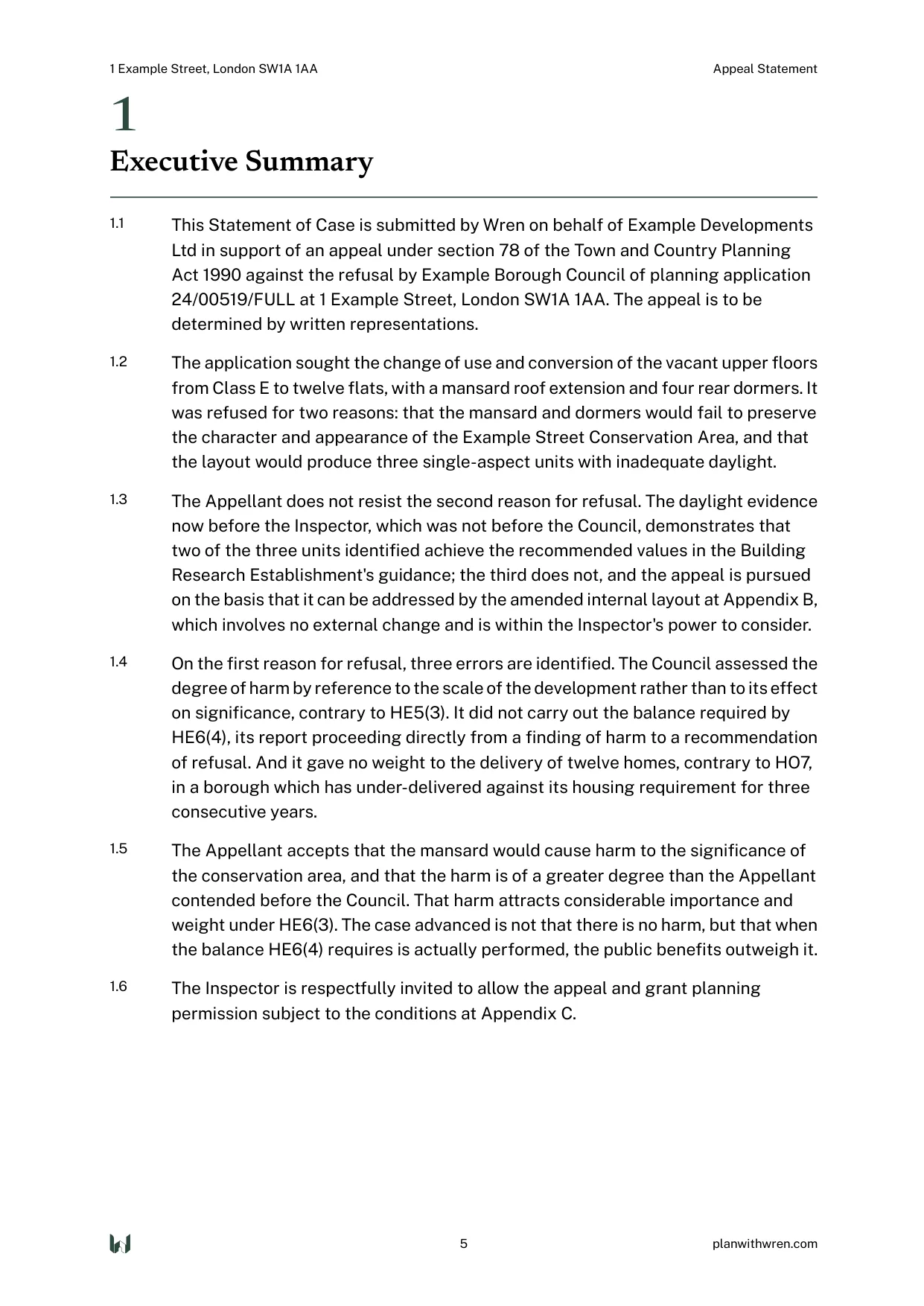
Appeal Statement
Open the specimen
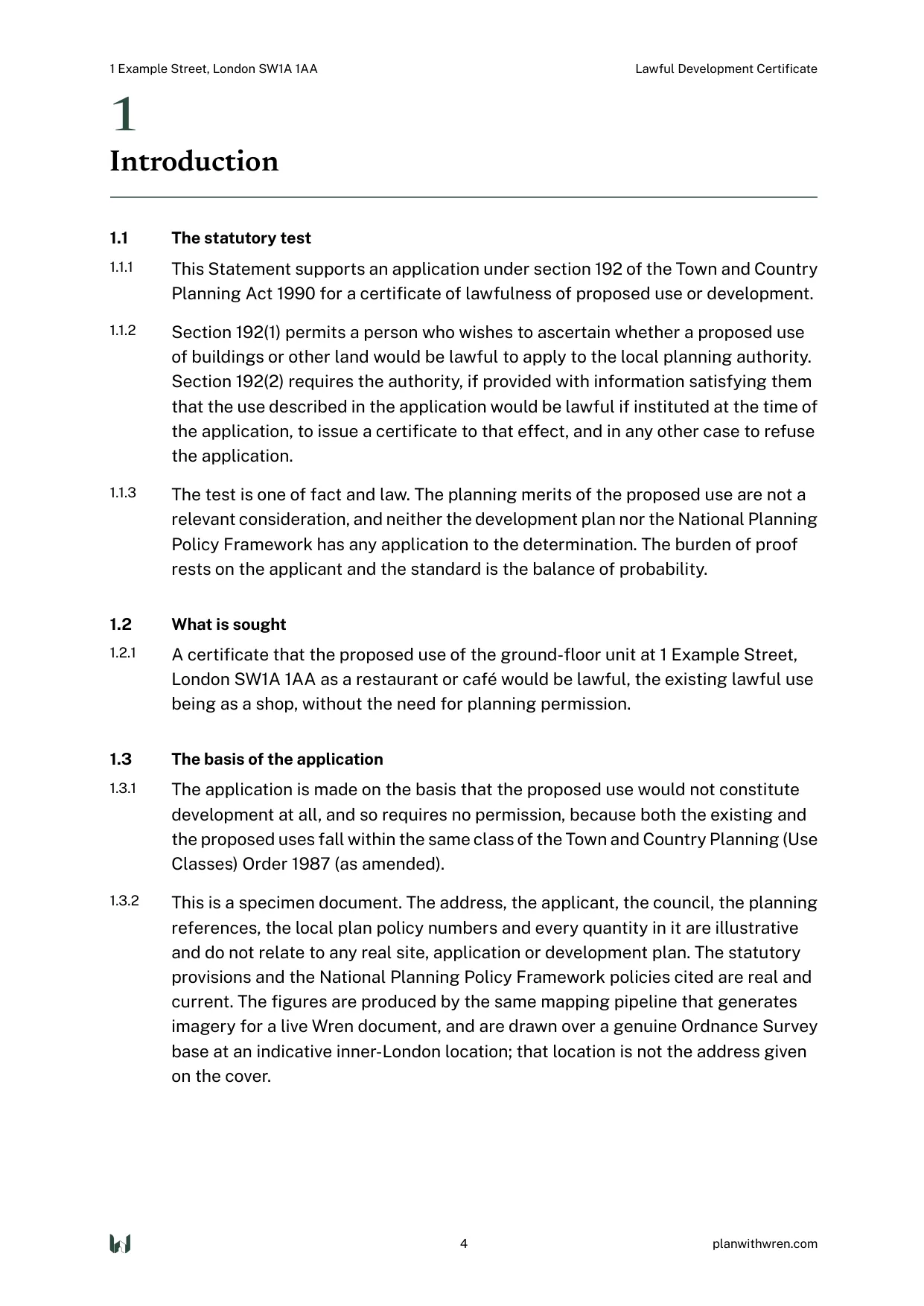
Lawful Development Certificate
Open the specimen
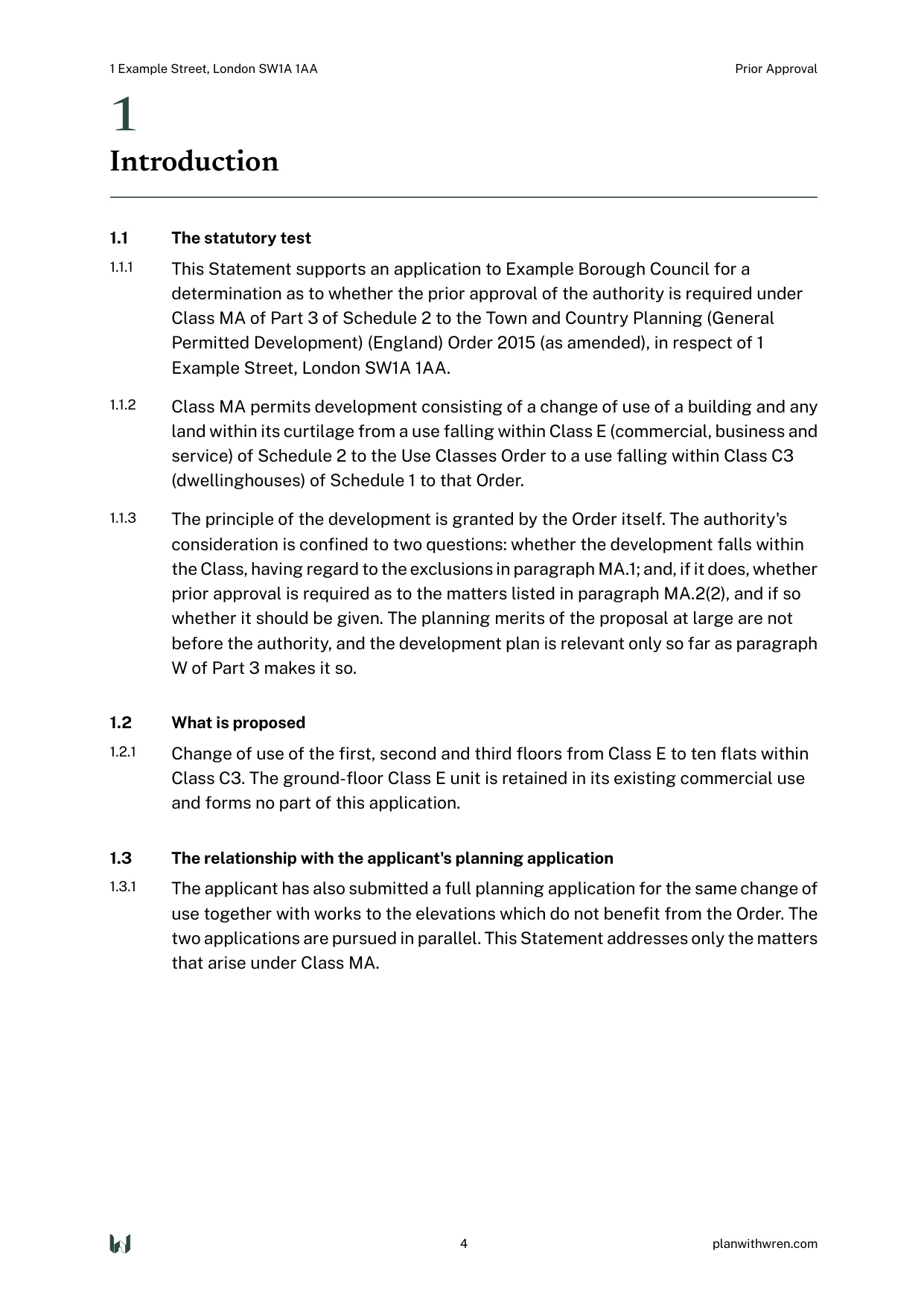
Prior Approval
Open the specimen
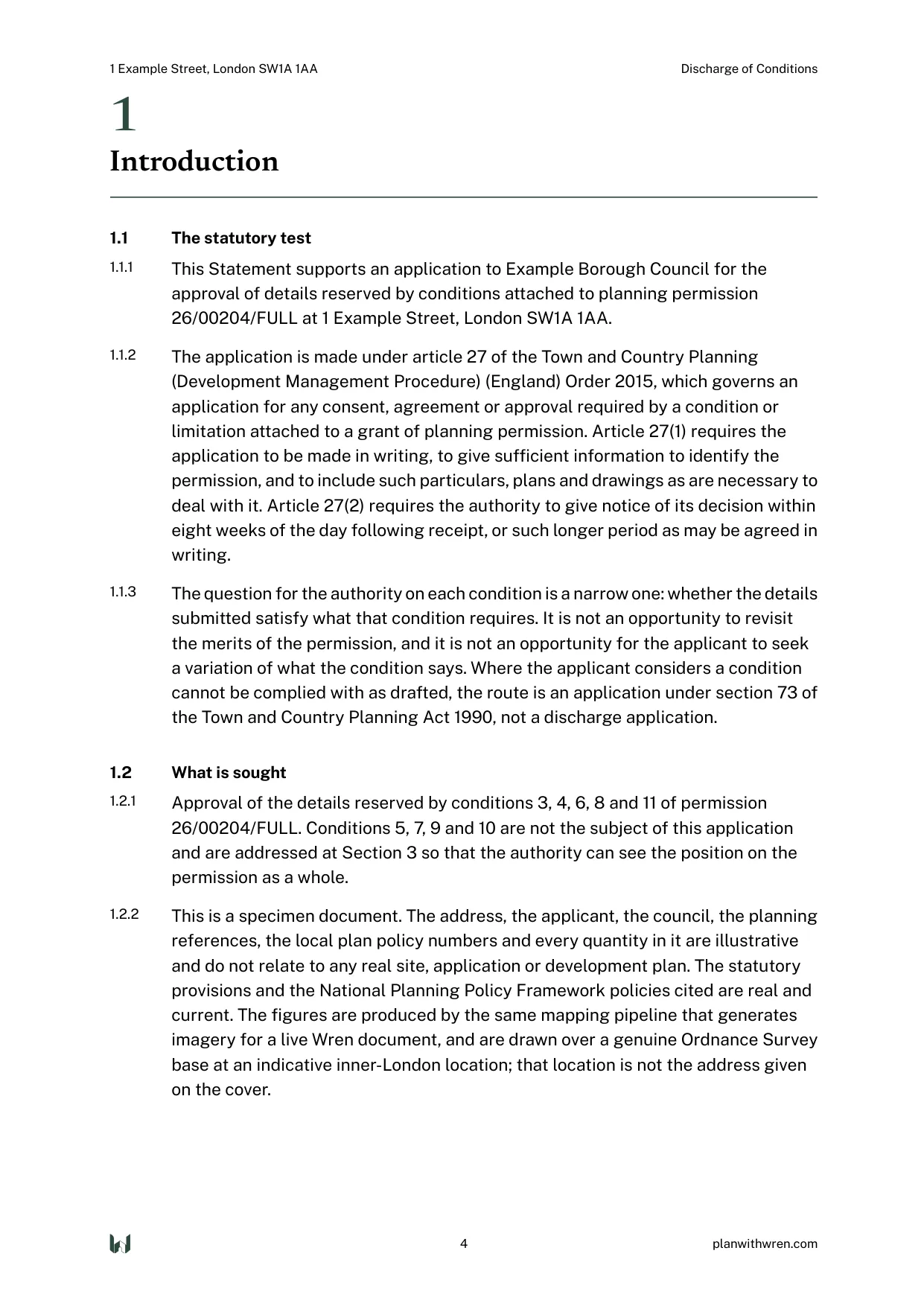
Discharge of Conditions
Open the specimen
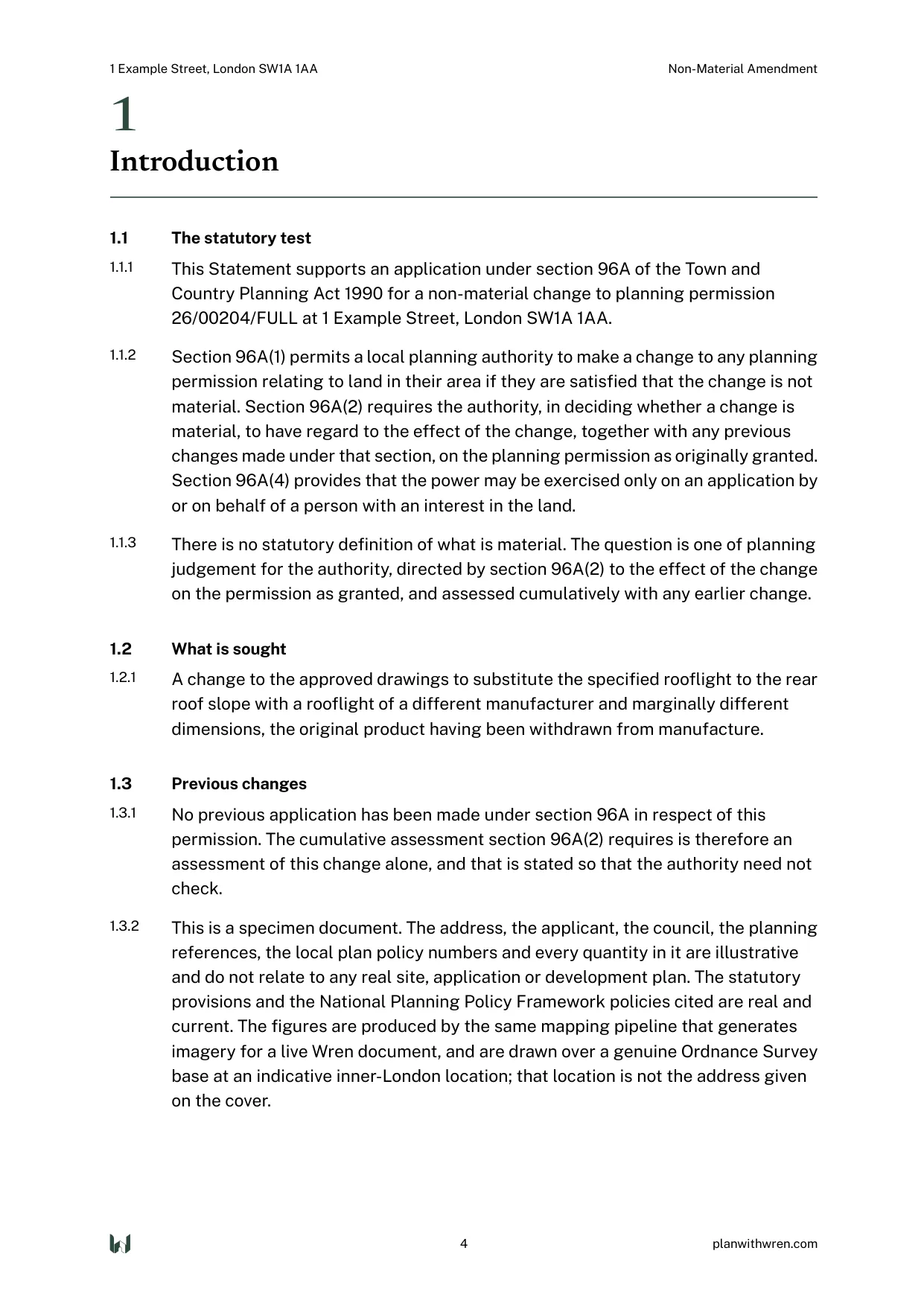
Non-Material Amendment
Open the specimen
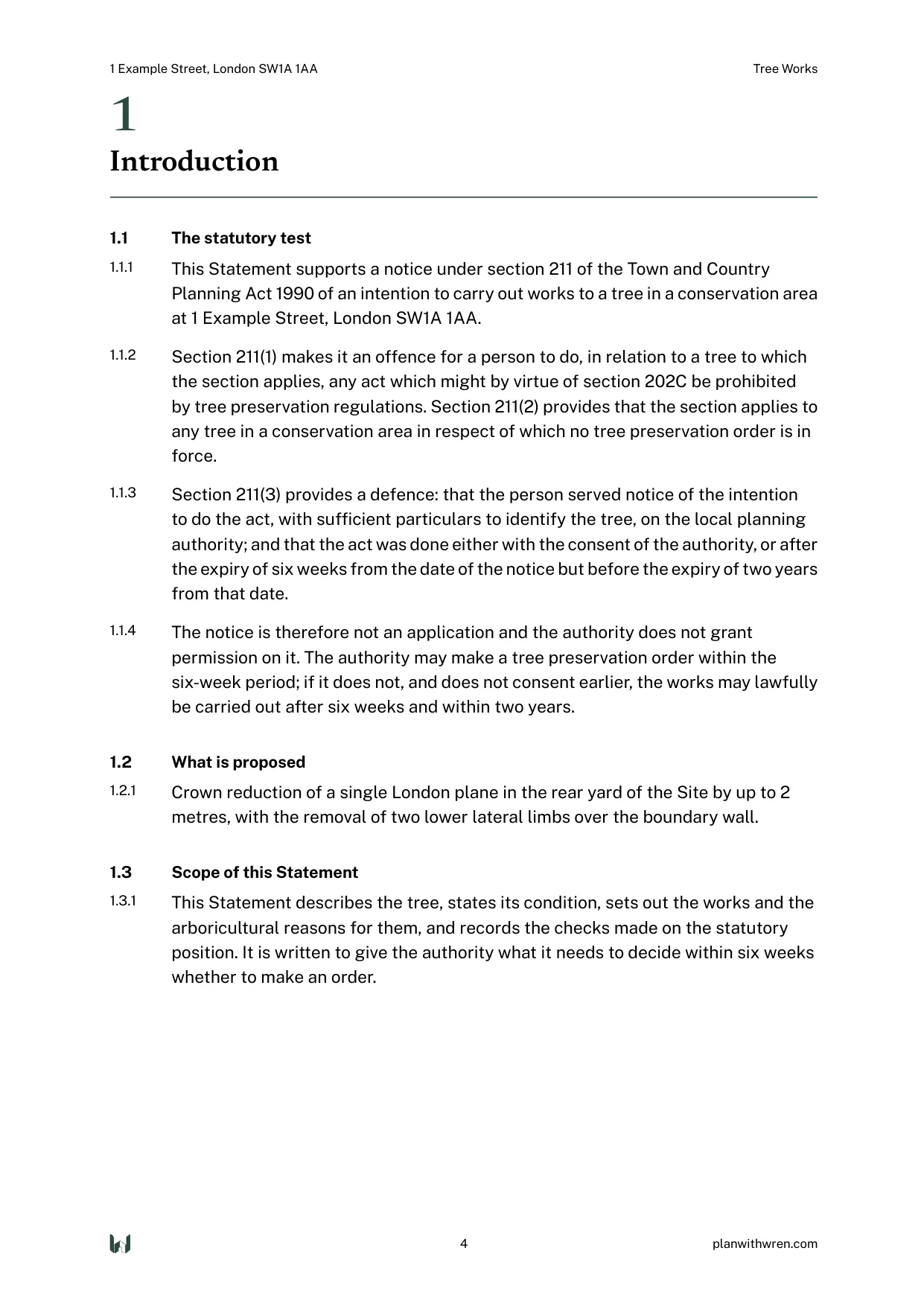
Tree Works
Open the specimen
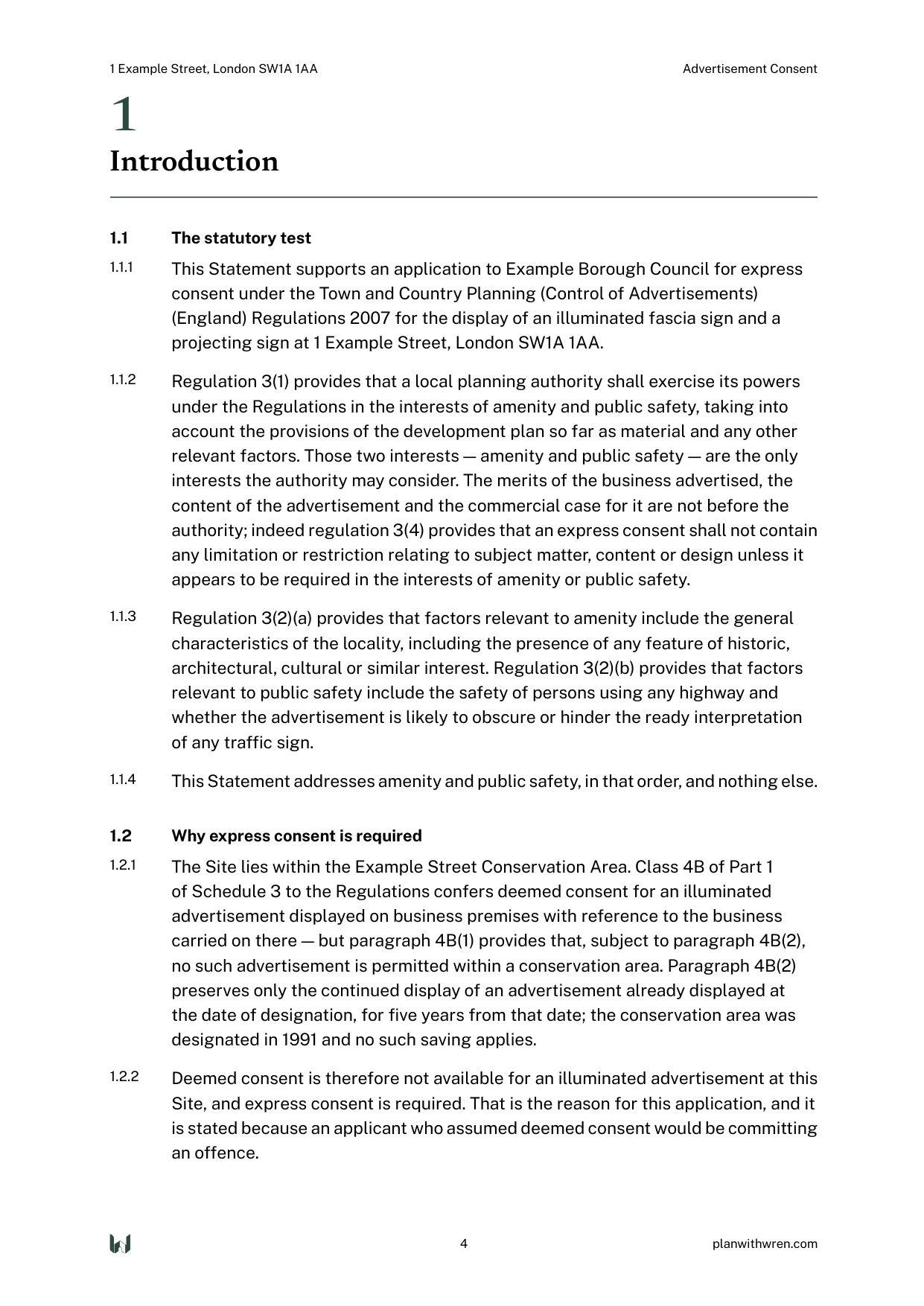
Advertisement Consent
Open the specimen
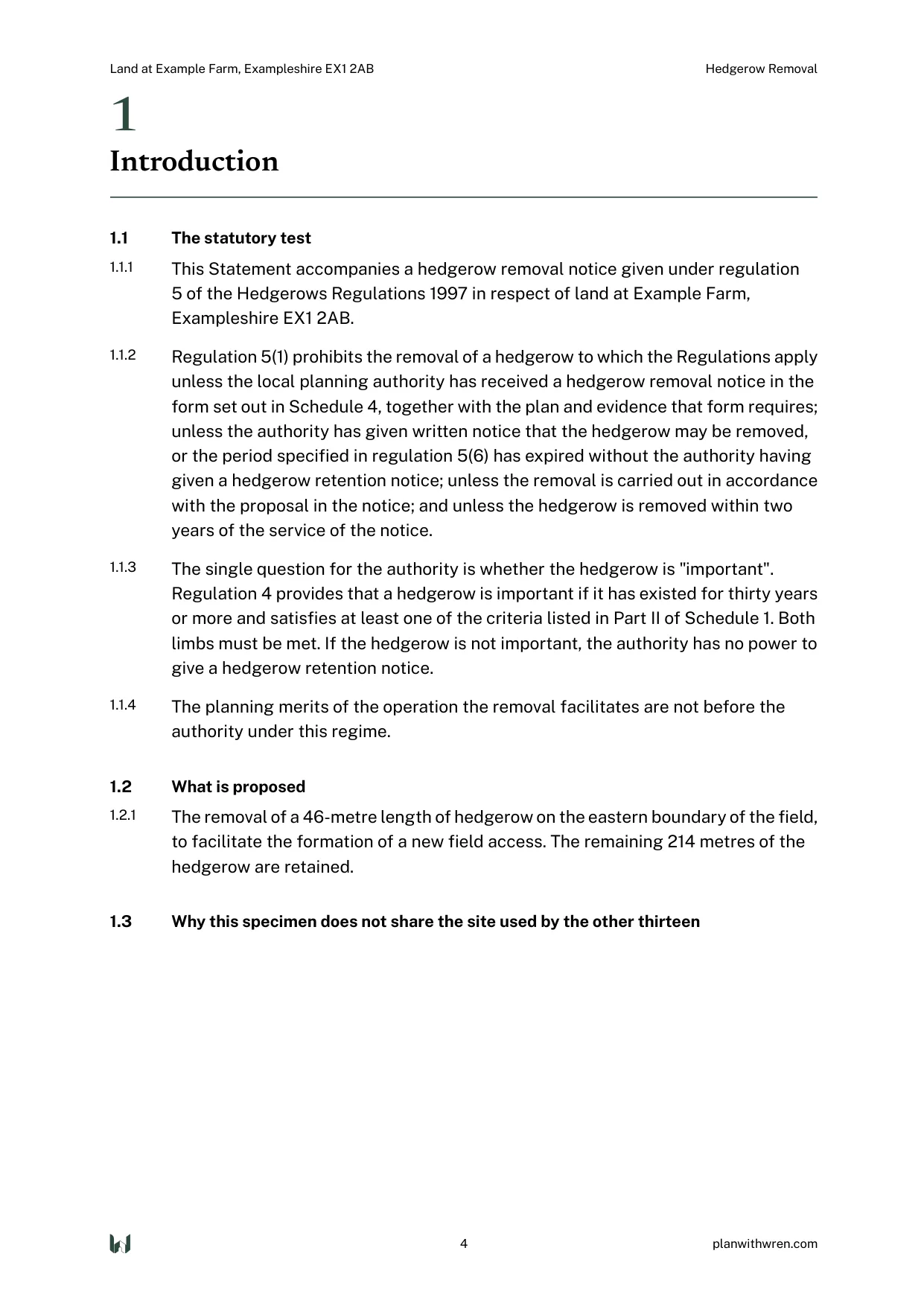
Hedgerow Removal
Open the specimen
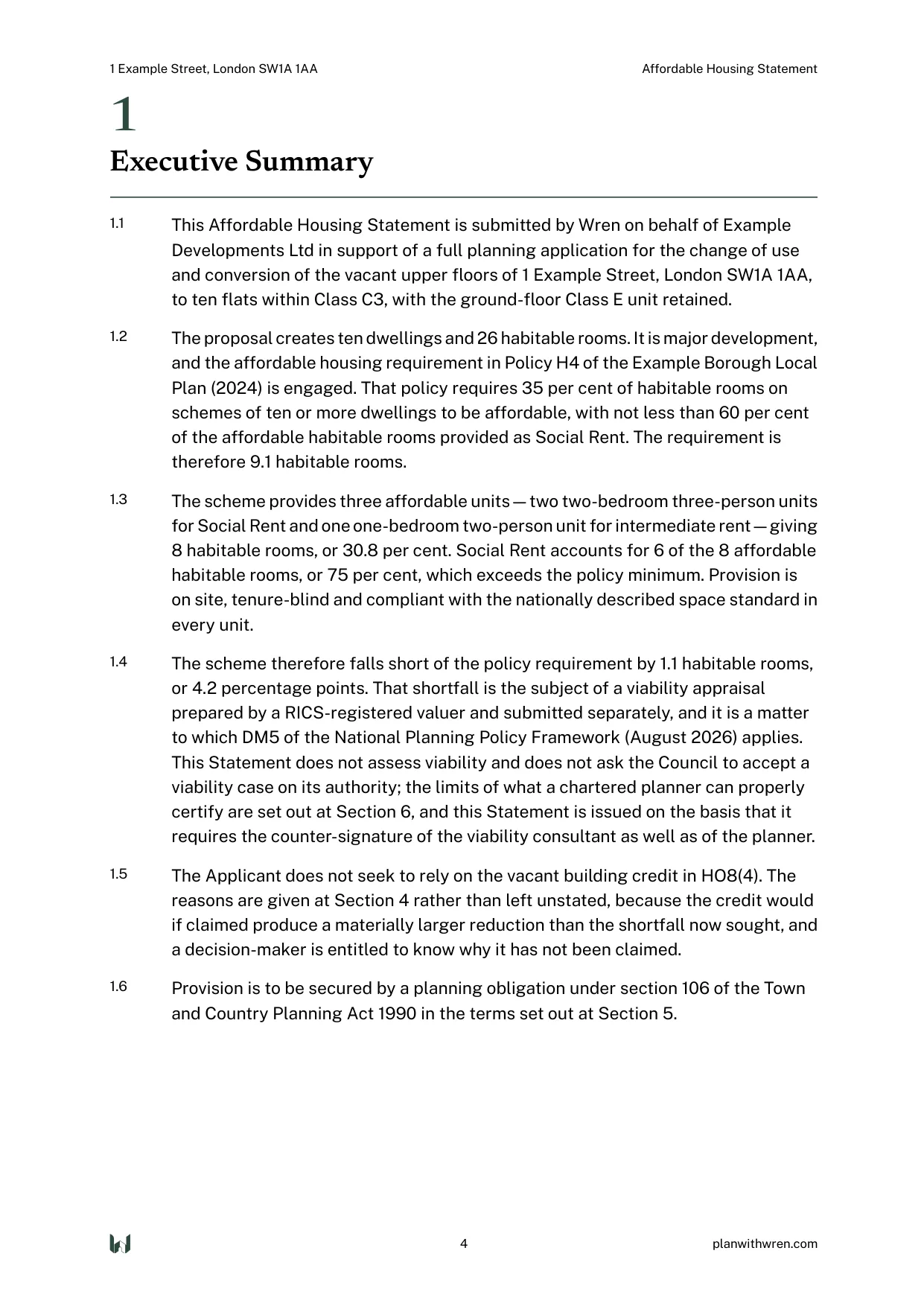
Affordable Housing Statement
Open the specimen
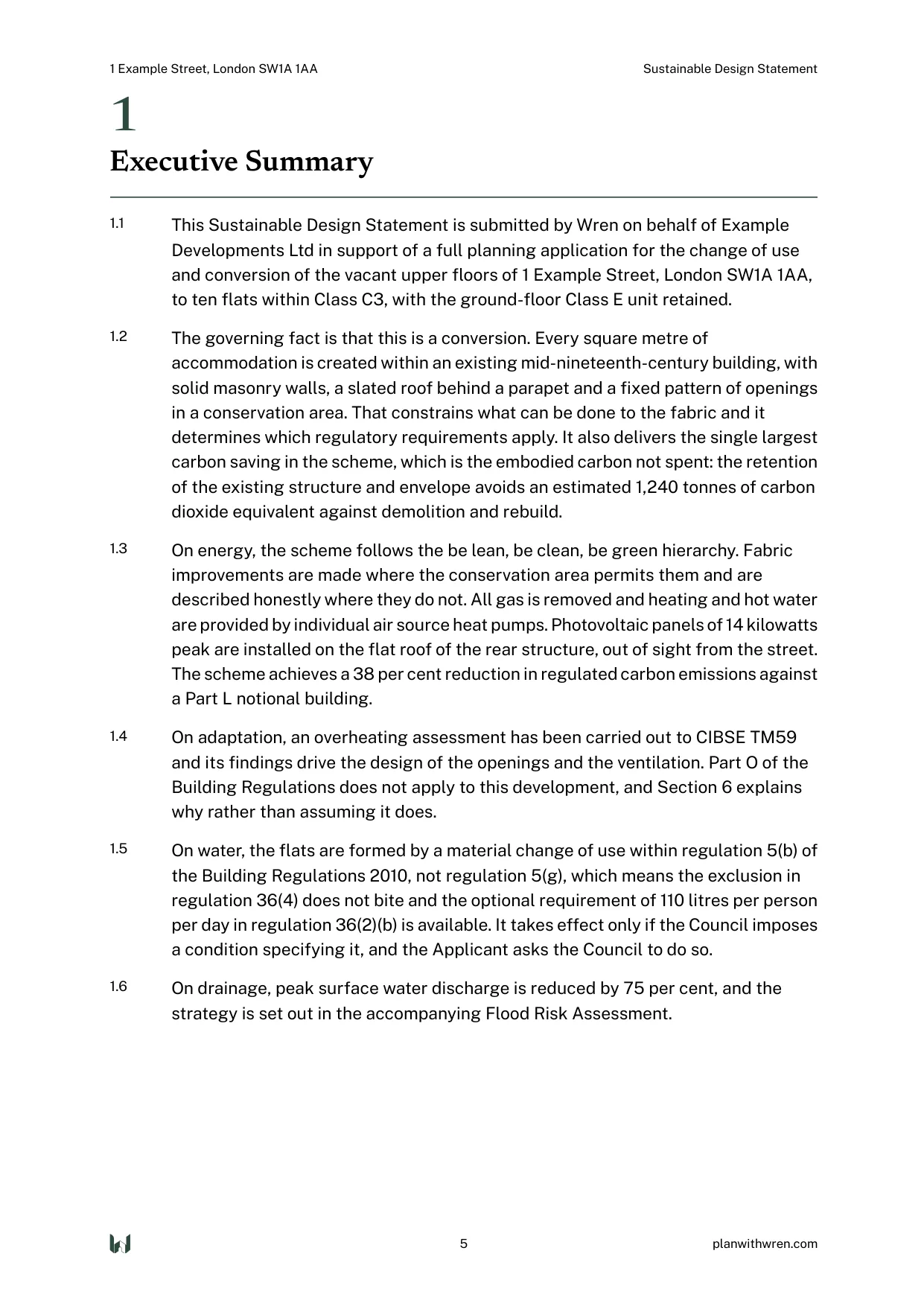
Sustainable Design Statement
Open the specimen
Every type
All 14 are published in full.
Not an extract and not a placeholder dressed up as a document — the whole file, as the renderer produces it. Where a type carries a limit on what Wren produces, its own page says so.
| Document | Specimen |
|---|---|
| Planning Statement | Published |
| Design and Access Statement | Published |
| Heritage Statement | Published |
| Flood Risk Assessment | Published |
| Appeal Statement | Published |
| Lawful Development Certificate | Published |
| Prior Approval | Published |
| Discharge of Conditions | Published |
| Non-Material Amendment | Published |
| Tree Works | Published |
| Advertisement Consent | Published |
| Hedgerow Removal | Published |
| Affordable Housing Statement | Published |
| Sustainable Design Statement | Published |
Find out which of these your site needs.
Draw a boundary and the appraisal names the route, lists the documents that route requires, and prices the set. Before you commit to anything.