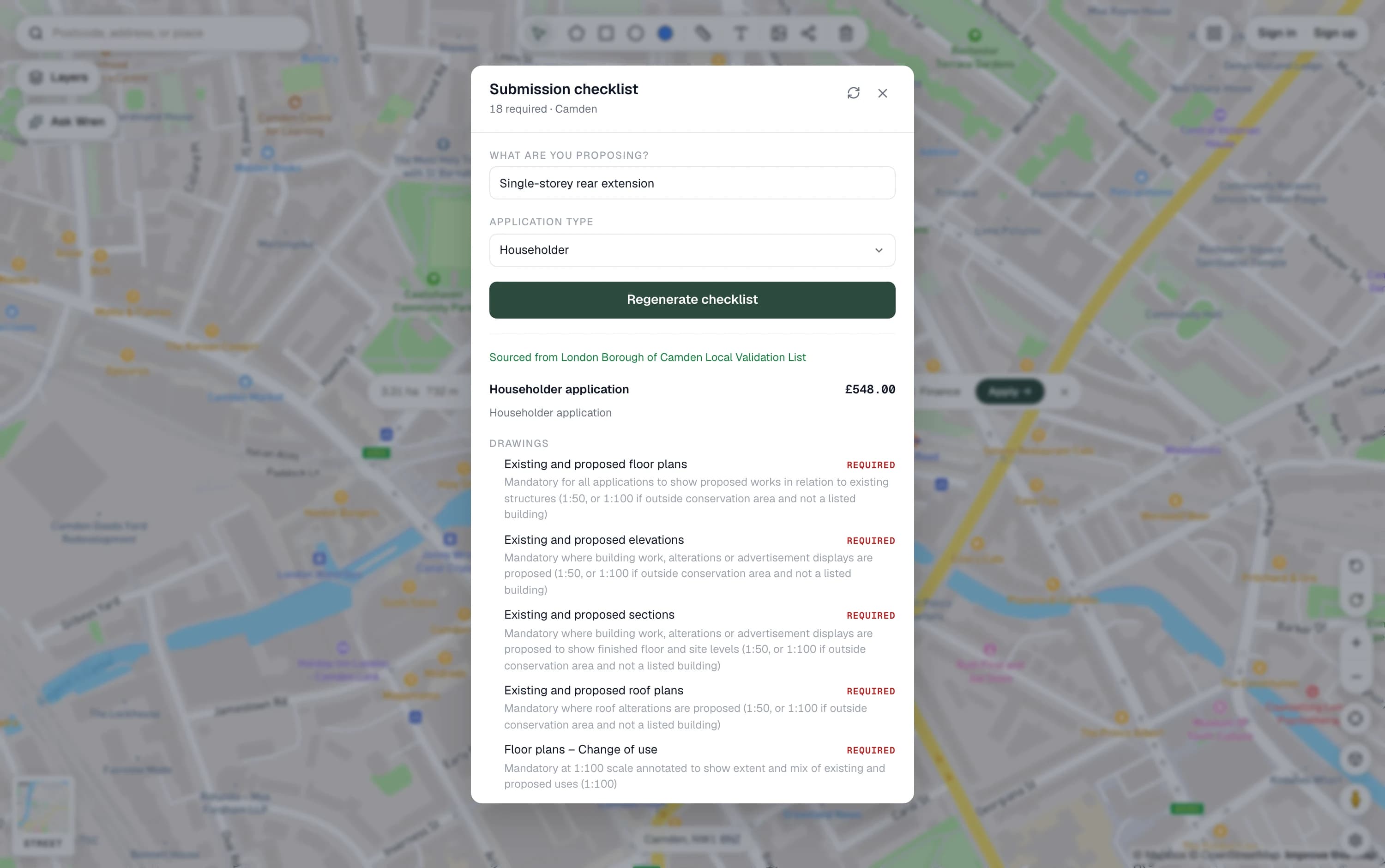
14 document types
A draft that cannot cite
its source does not ship.
Every AI writing tool in this industry produces confident prose. The difference here is what happens when a citation cannot be verified: the draft fails, nothing is saved, and nobody is charged.
Real output
12 specimens you can open now
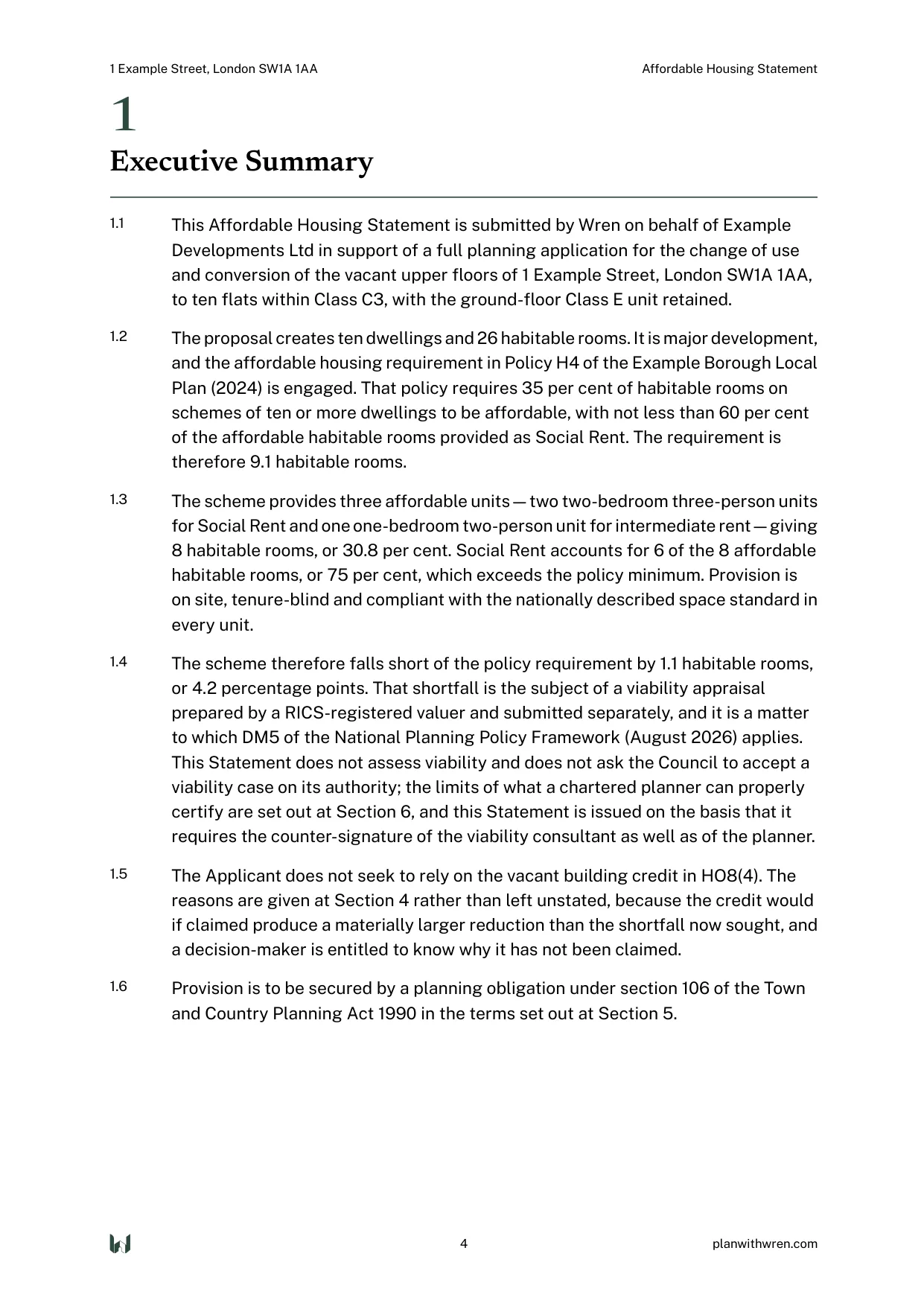
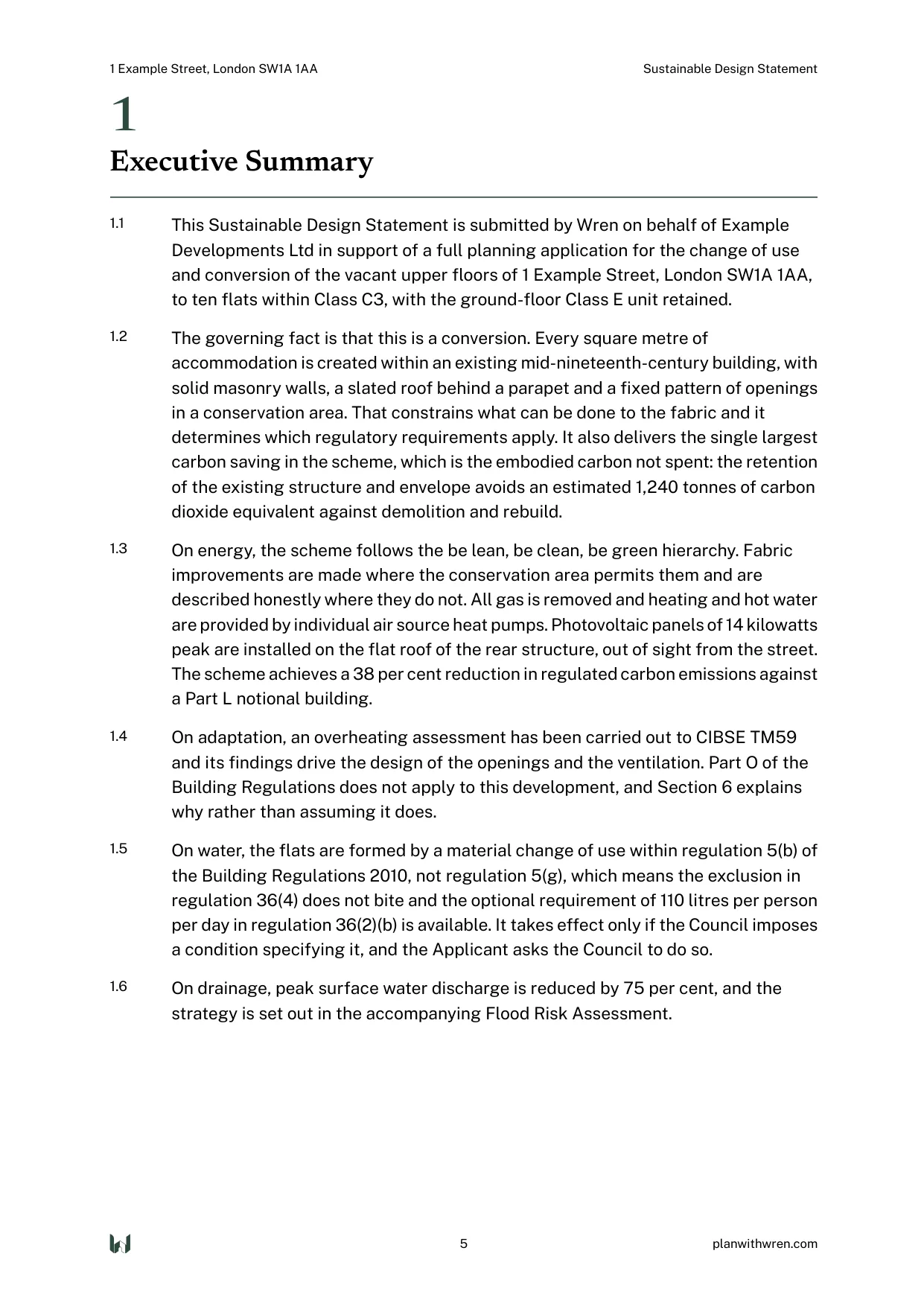
These are files produced by the production renderer, not illustrations of one. Open any of them and read the whole thing.
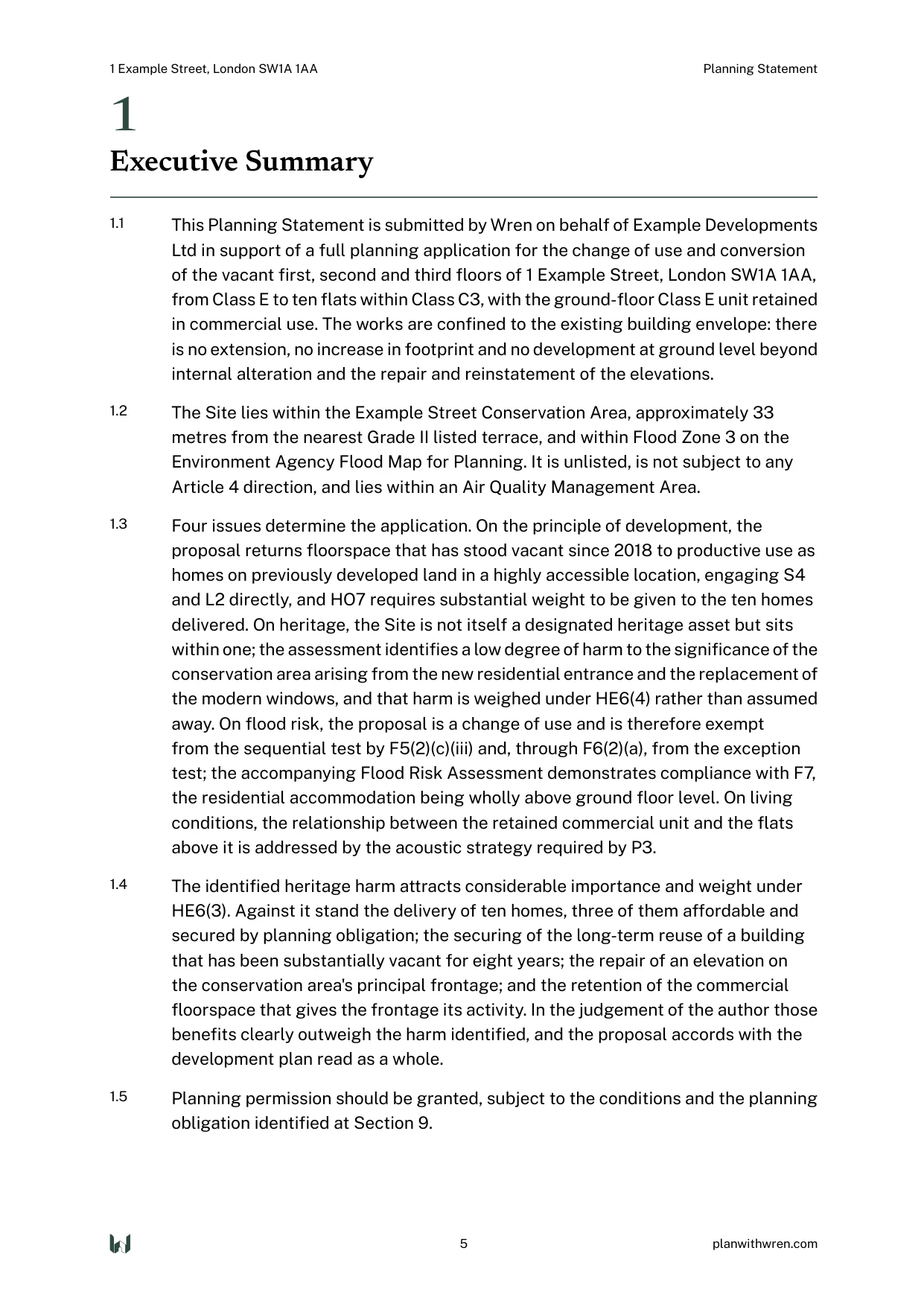
Planning Statement
Open the specimen

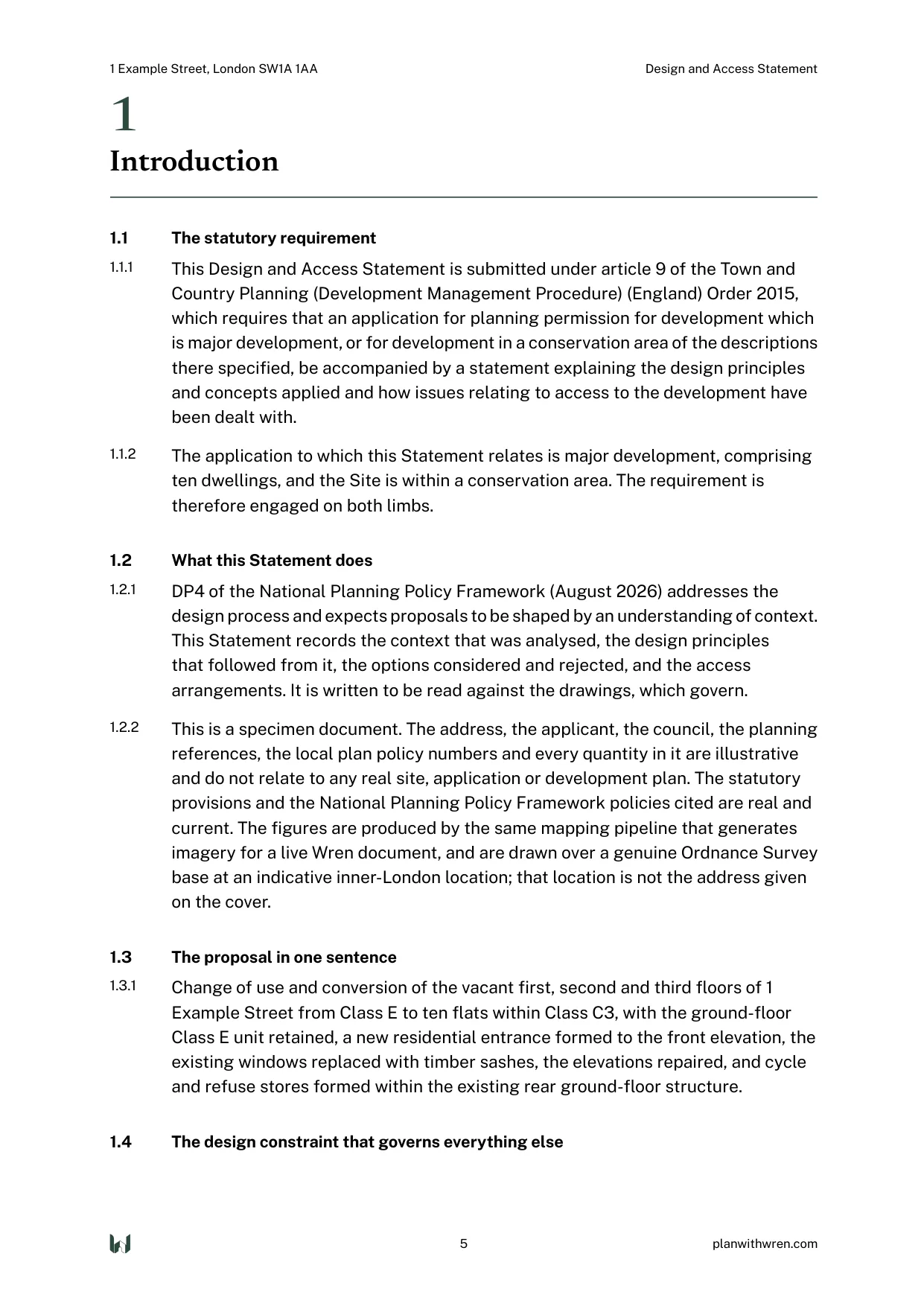
Design and Access Statement
Open the specimen

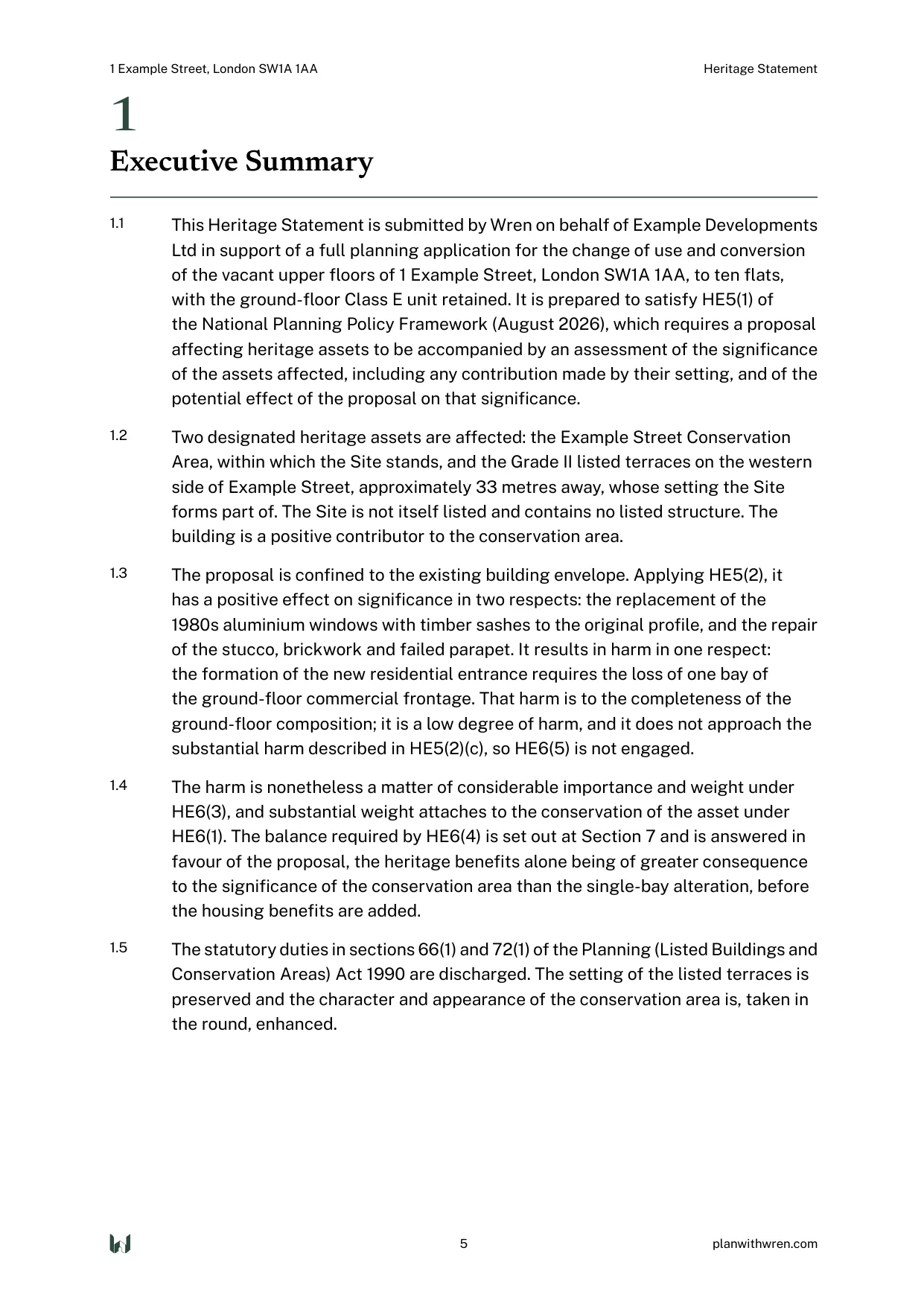
Heritage Statement
Open the specimen

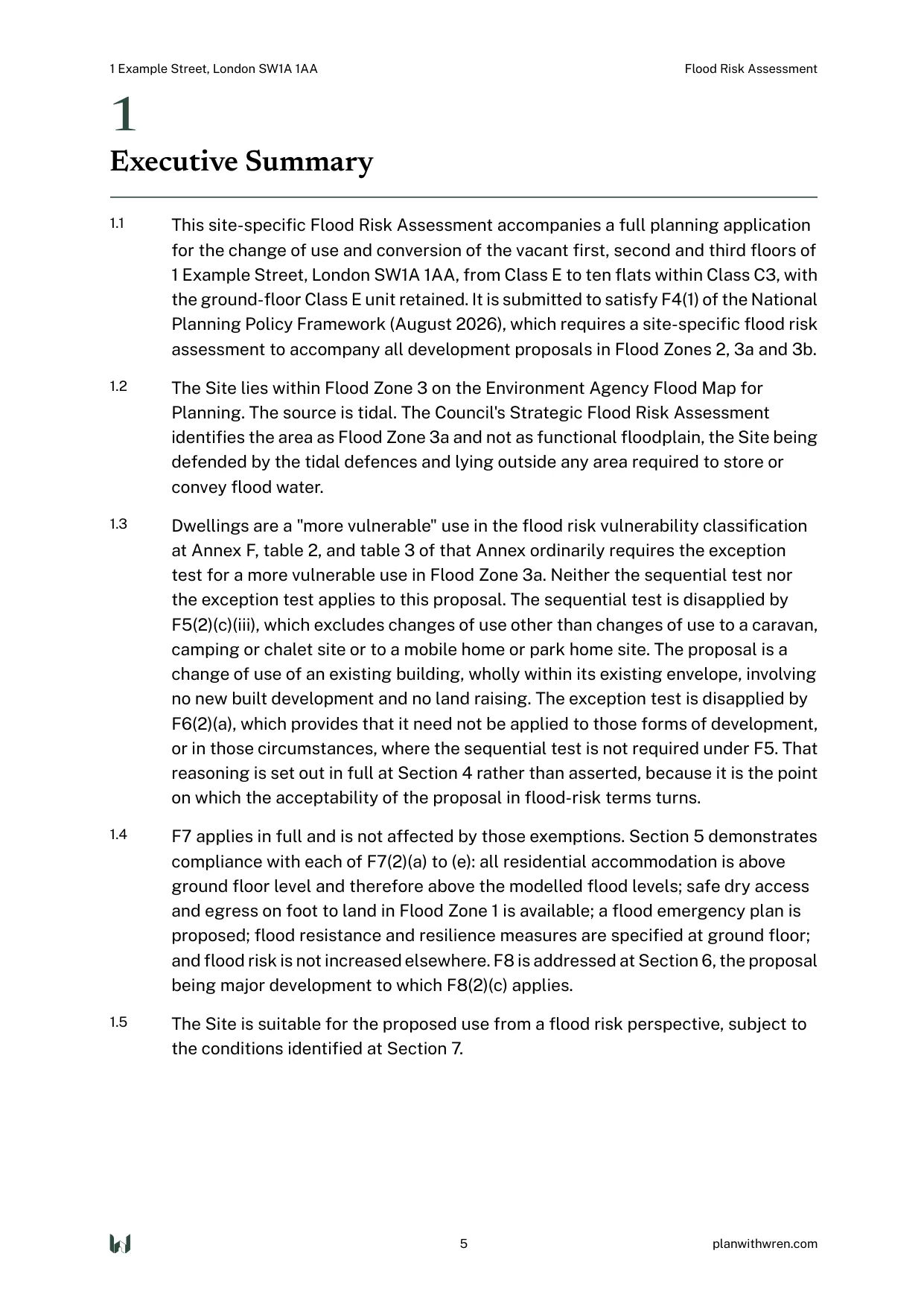
Flood Risk Assessment
Open the specimen

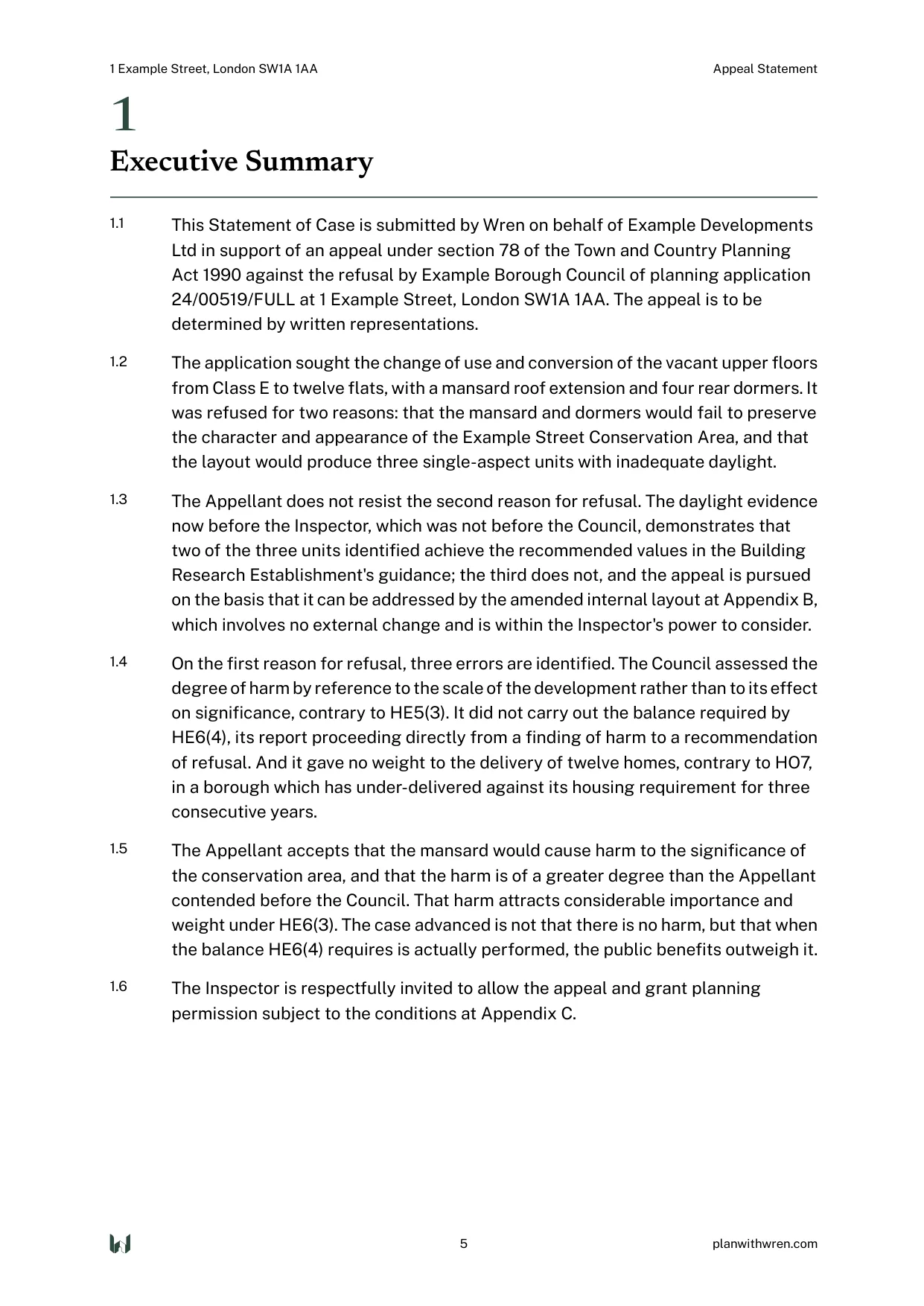
Appeal Statement
Open the specimen

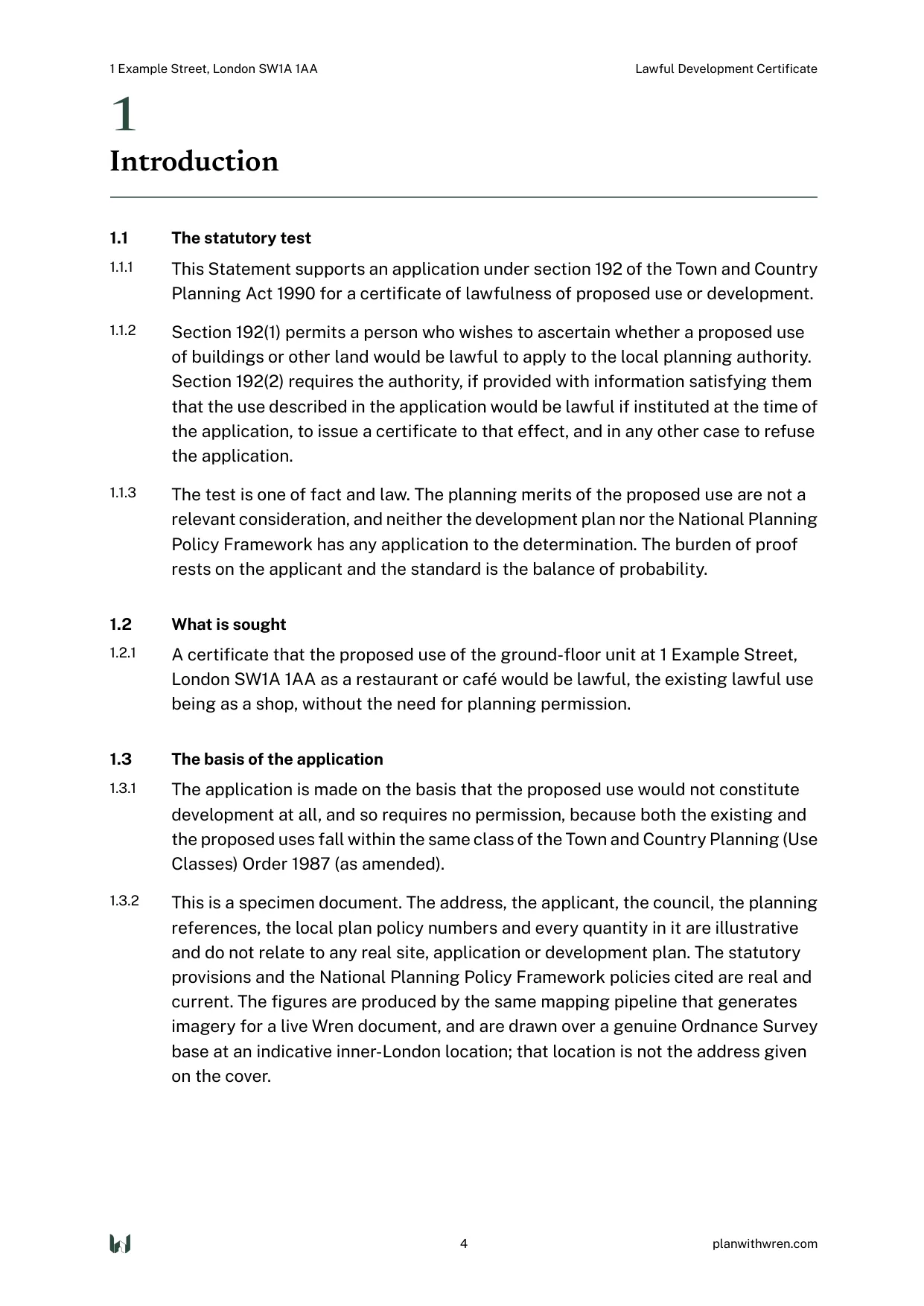
Lawful Development Certificate
Open the specimen

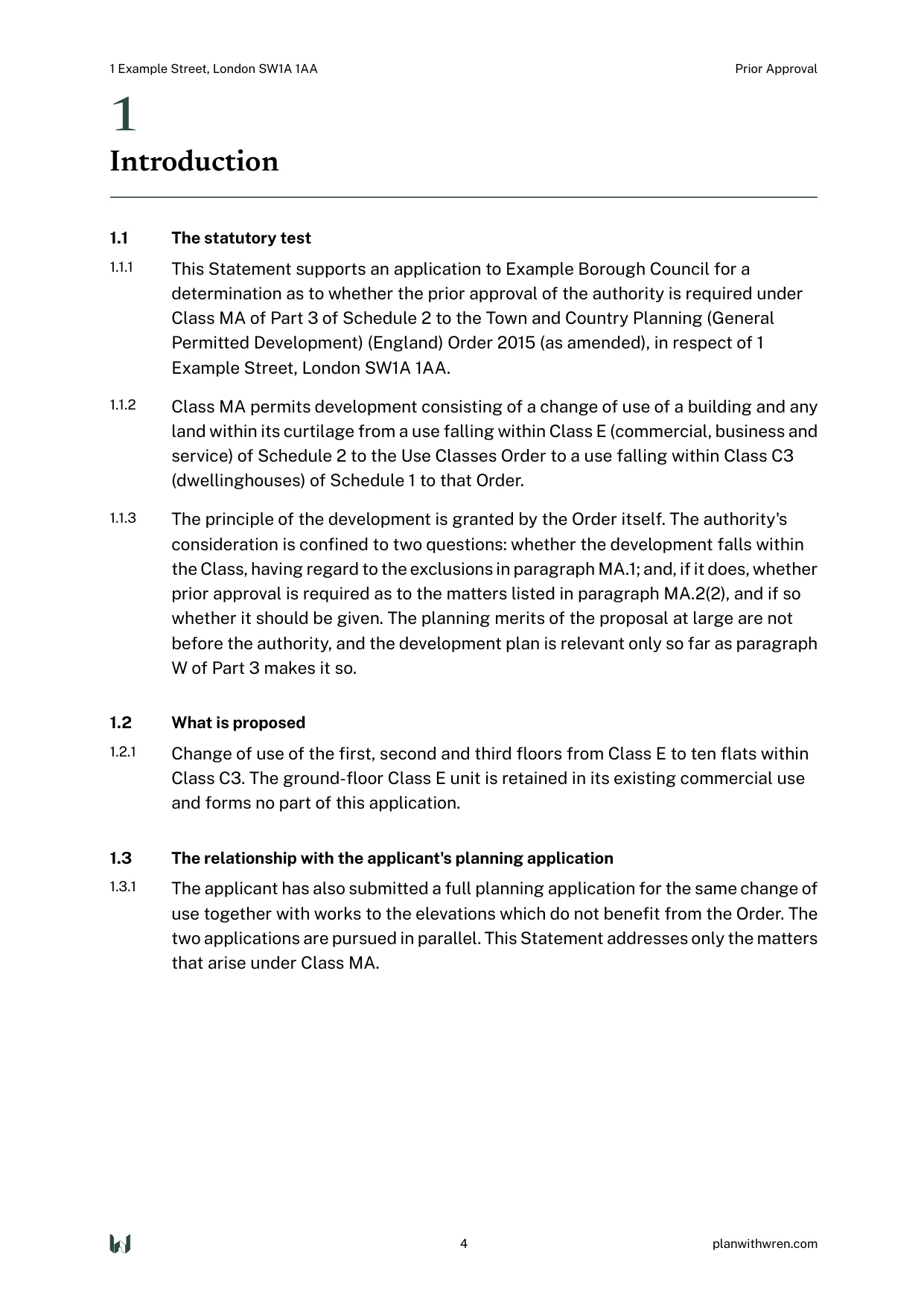
Prior Approval
Open the specimen

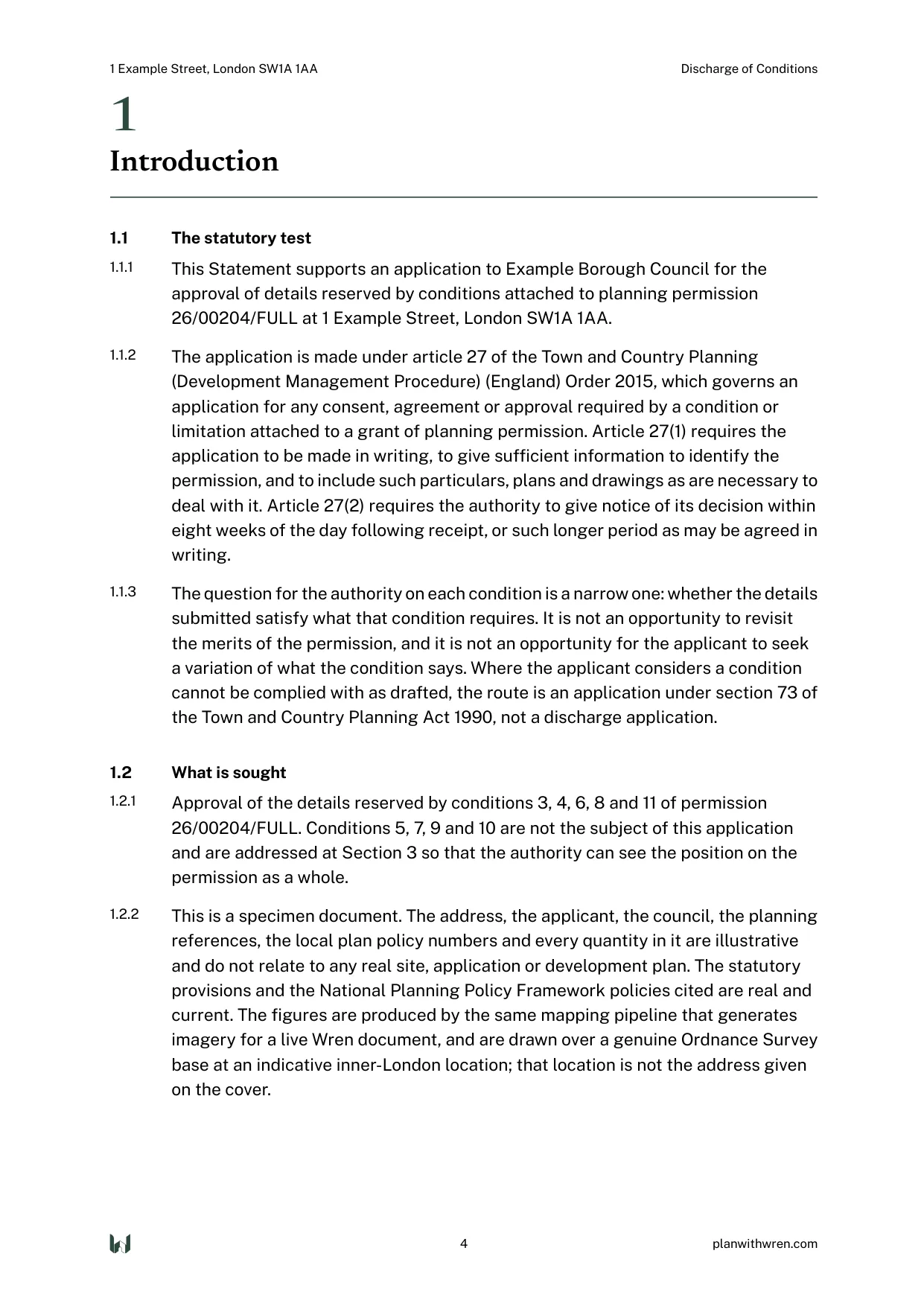
Discharge of Conditions
Open the specimen

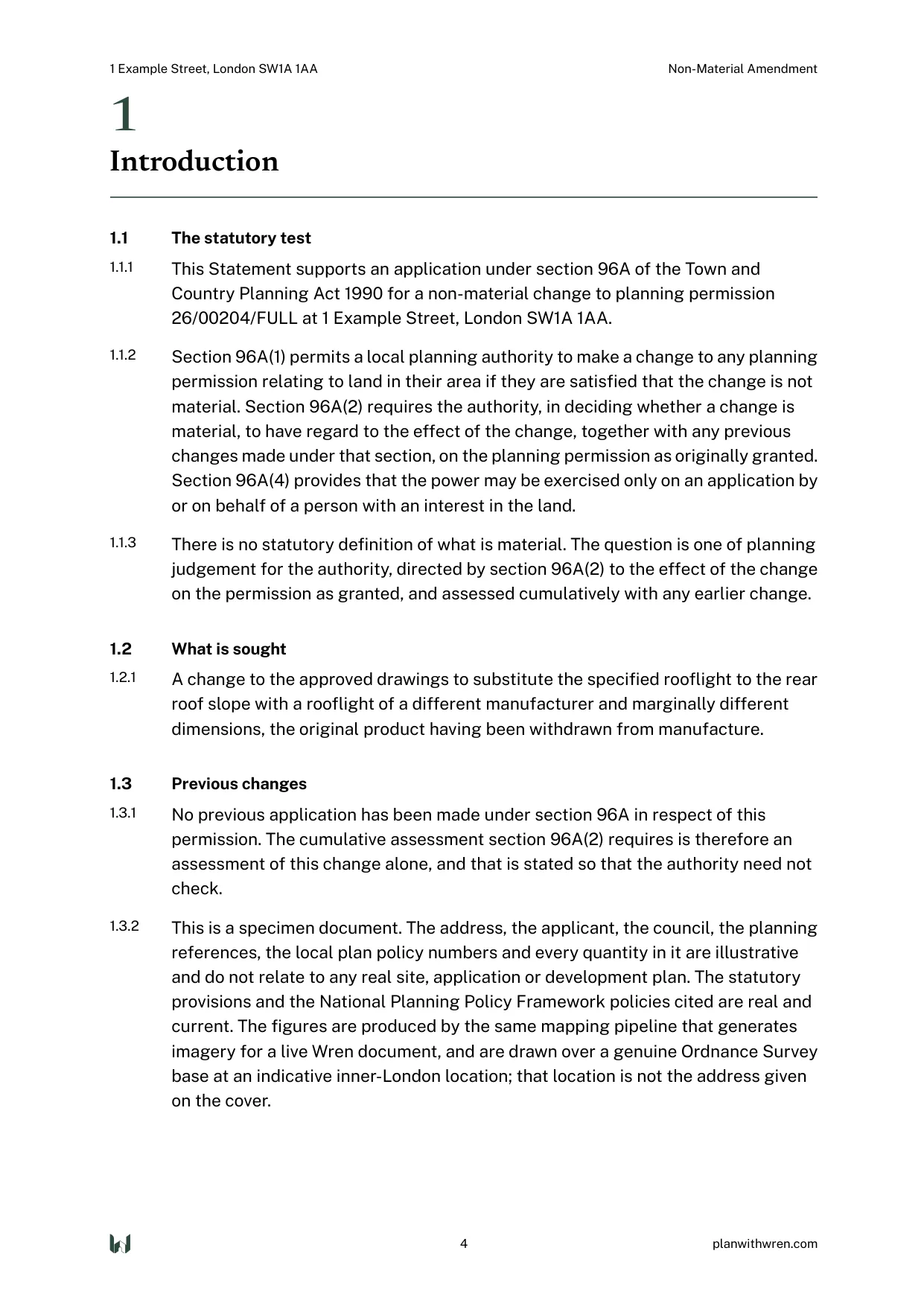
Non-Material Amendment
Open the specimen

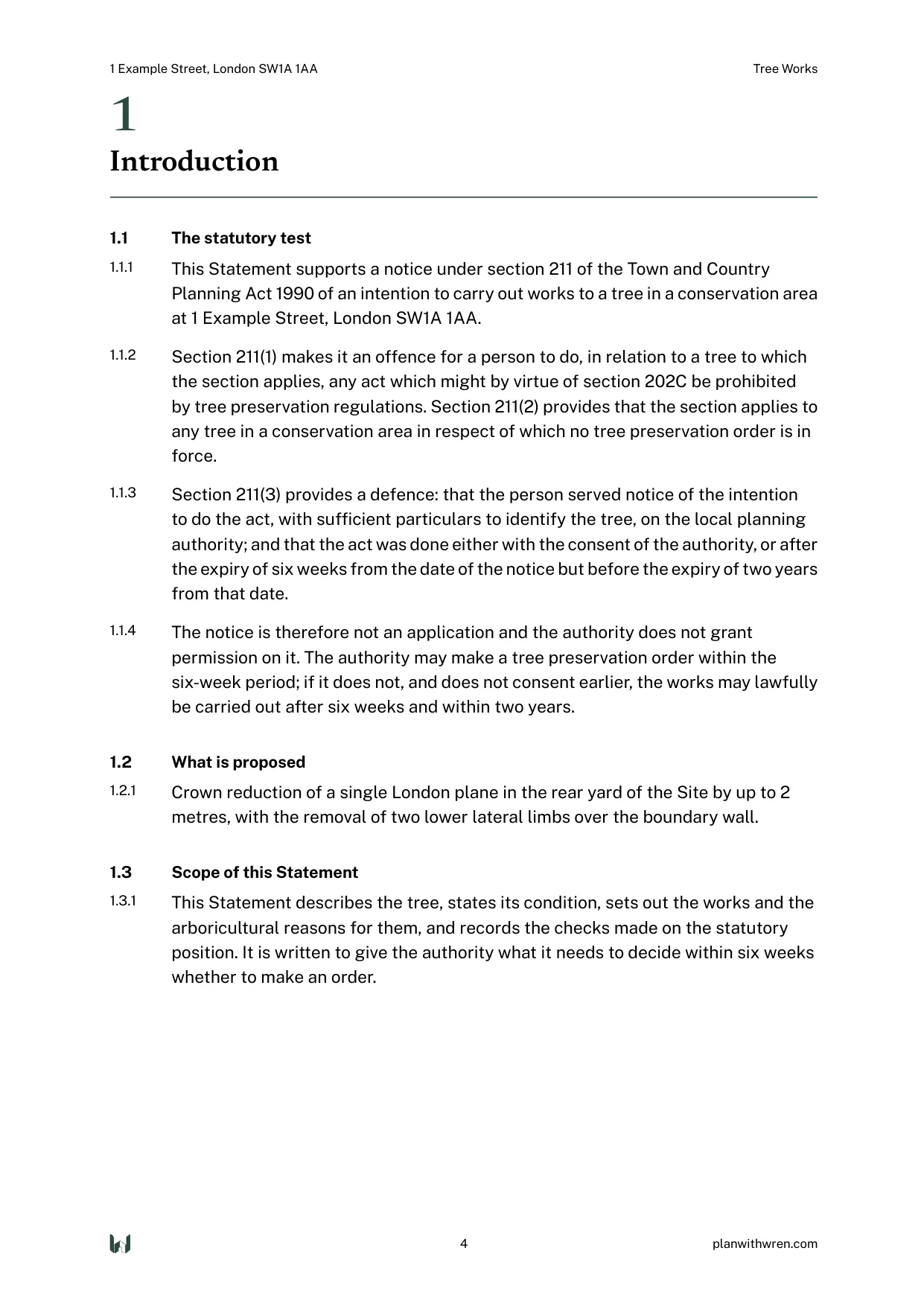
Tree Works
Open the specimen

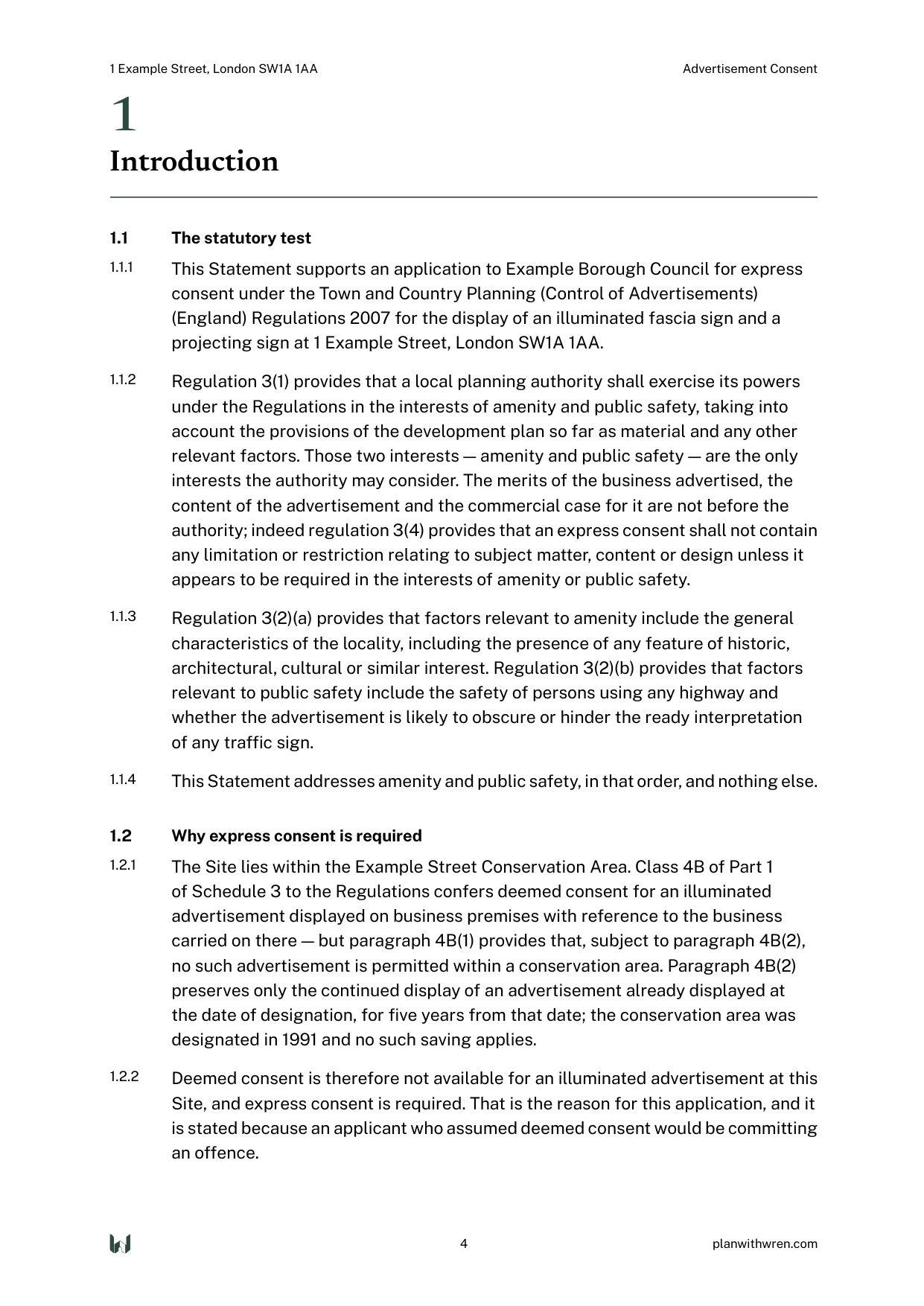
Advertisement Consent
Open the specimen

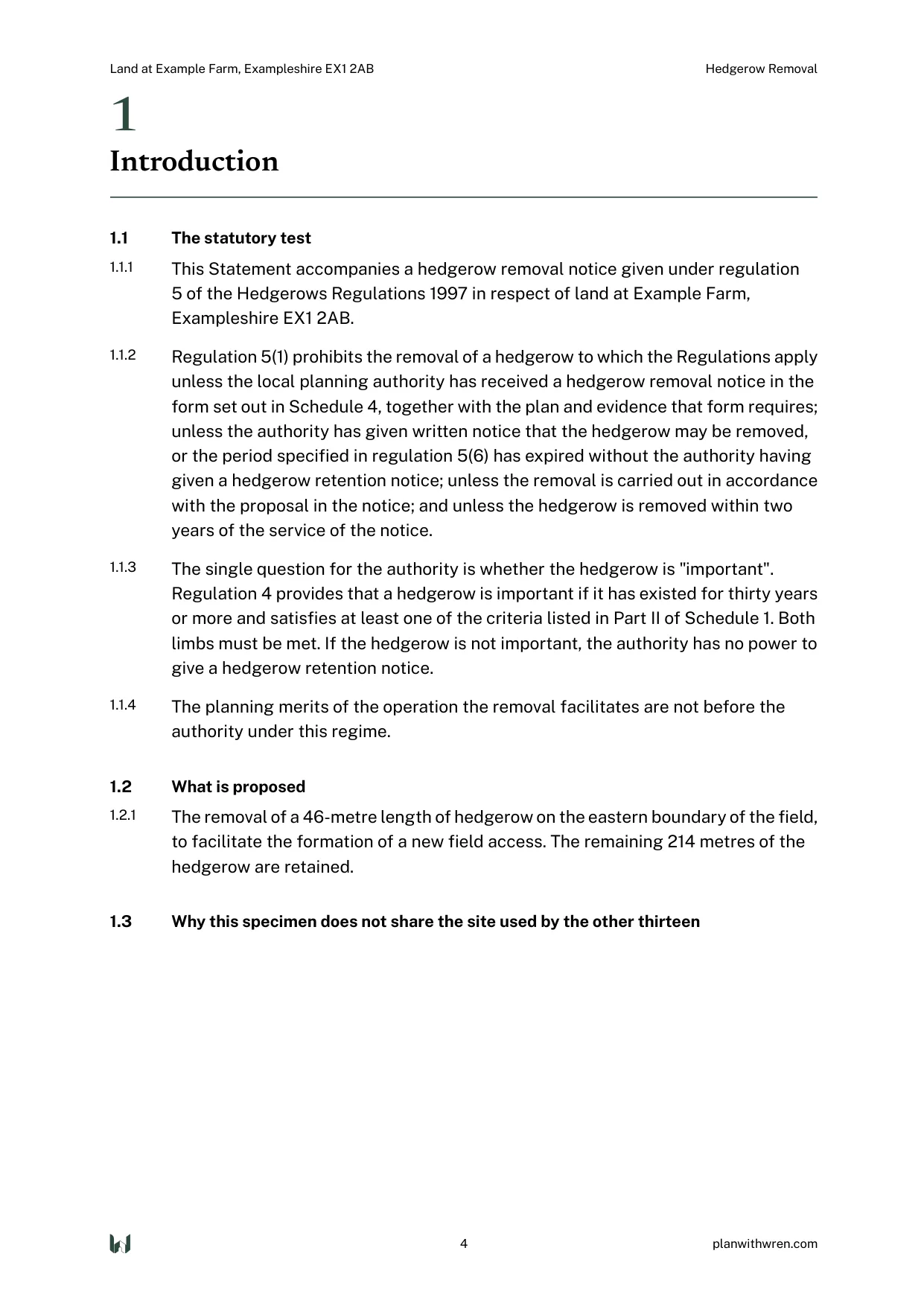
Hedgerow Removal
Open the specimen
The set
You do not pick a package.
Which documents you get is decided by your application route and by what the map actually finds on your site.
A householder extension outside a conservation area gets a Planning Statement. Put the same extension inside one and a Heritage Statement is added, because the duty on the decision-maker changes. Create a single new dwelling in a conservation area and a Design and Access Statement becomes a statutory requirement, which is one of the commonest applications in the country and one of the most commonly missed. Sit in Flood Zone 2 or 3, or on a hectare or more, and a Flood Risk Assessment is added.
A document required for two separate reasons is listed once, with the primary reason given, and charged once.
Stated in the quote, before you pay
Two honest limits travel with the quote rather than being discovered afterwards. A major application genuinely needs a Transport Statement, and Wren cannot generate one, so it is not sold. And for tree works, the correct statutory artefact is a form plus a tree-by-tree schedule of works, so what Wren produces is described as a supporting statement and the form is named as something you file separately.
Two modes
A research draft and a real document are different things.
They come out of the same engine under the same rules. Only one of them carries a membership number.
Research draft
Credits · for you to think with
- Length
- About 1,200 words, four to six pages
- Structure
- Five fixed sections: site and proposal, principle, policy compliance, constraints, conclusion
- Gaps
- Left inline, marked to be confirmed
- Header
- Every page reads: draft, not for submission
- Signed
- No
Case document
Included in the case fee · filed with your council
- Length
- Fifteen to twenty pages and up, proportionate to the scheme
- Structure
- The full corpus-derived template for that document type, in its order, under its names
- Gaps
- Routed to a separate reviewer file. None in the document itself
- Numbering
- Decimal throughout, with a cover, contents and signature block
- Signed
- Yes, by a named chartered professional
Figures
Every figure is a real image or it is not there.
A document with a box saying insert plan here is not a document.
A location plan and an aerial context plan on every case. Constraint maps where a constraint bites. A comparables map where comparables were found. Historic Ordnance Survey extracts from the 1870s, 1890s and 1930s on heritage work. Your own photographs and drawings, placed where they are referenced.
Figures are numbered before the prose is written, so the text can refer to Figure 6.1 by number and mean it. If an image cannot be produced, that figure is dropped and the others keep their numbers, so Figure 6.1 always means the same figure. Captions describe the source, never a conclusion.

The rule
Retrieval failures fail loudly. There is no fabrication fallback. If a source is unreachable the citation is refused, never guessed.
That sentence is written into the codebase as a rule with a number, and it applies to every draft with no way to switch it off.
Then
What happens to a draft
01
It goes to a chartered planner, not to you
A draft is a proposal to a professional. Until it is signed you can see that it exists and where it has got to, but not its contents, because a document carrying a case reference that no planner has stood behind is not something anyone should be acting on.02
They download it as a Word file and rewrite what they want
Not a comment box. The actual editable document, in the tool they already use. What they change is captured quietly against the original, and used to make the next draft better.03
They upload their version and sign it
The signature is taken over the exact bytes of the file they uploaded, with their name, their chartered body, their membership number, and the time. Not over a template. Over the file.04
Then it is released to you
You read the whole pack, and nothing can be filed until you have approved it.
Start here
Read one before you buy one.
12 of the 14 document types have a full specimen you can open right now. They are the real output of the real renderer.